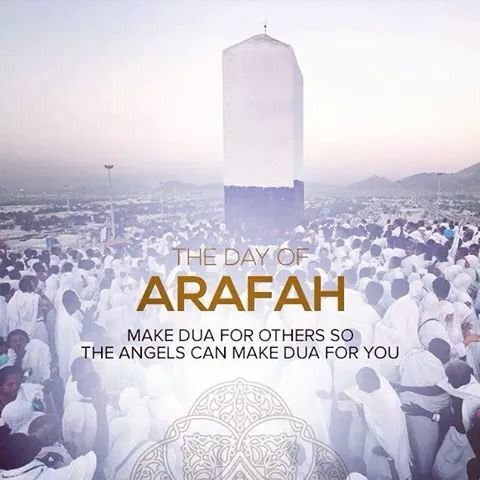
The Day of Arafah is an Islamic holiday that falls on the 9th day of Dhu al-Hijjah of the lunar Islamic Calendar. It is the holiest day in the Islamic calendar (the holiest night being The Night of Power), the second day of the Hajj pilgrimage, and the day after is the first day of the major Islamic holiday of Eid al-Adha.
At dawn of this day, Muslim pilgrims will make their way from Mina to a nearby hillside and plain called Mount Arafat and the Plain of Arafat. It was from this site that the prophet Muhammad gave one of his last sermons in the final year of his life. Some Muslims hold that part of the Quranic verse announcing that the religion of Islam had been perfected was revealed on this day.
Fasting on the Day of Arafah for non-pilgrims is a highly recommended Sunnah which entails a great reward; Allah forgives the sins of two years. It was narrated from Abu Qatadah that Muhammad (PBUH) was asked about fasting on the day of ‘Arafah and he replied: “It expires for the past and coming years”.
Imam An-Nawawi mentioned in his book al-Majmu’, “With regard to the ruling on this matter, Imam As-Shafi’i and his companions said: It is mustahabb (recommended) to fast on the day of Arafah for the one who is not in Arafah. As for the pilgrim who is present in Arafah, Imam As-Shafi’i in his book Al-Mukhtasar and his followers declared ‘It is mustahabb (recommended) for him not to fast’.”
Prohibiting the pilgrims from fasting on these days is a great mercy for them, for fasting will exert undue hardship on the person performing the hajj. Above all, Muhammad (PBUH) did not fast while he stood before Allah offering supplications in Arafah. On the other hand, those who are not performing their hajj may observe fasting to gain the merits of the blessed day.
Nelson Mandela International Day (or Mandela Day) is an annual international day in honour of Nelson Mandela, celebrated each year on 18 July, Mandela’s birthday. The day was officially declared by the United Nations in November 2009, with the first UN Mandela Day held on 18 July 2010. However, other groups began celebrating Mandela Day on 18 July 2009.
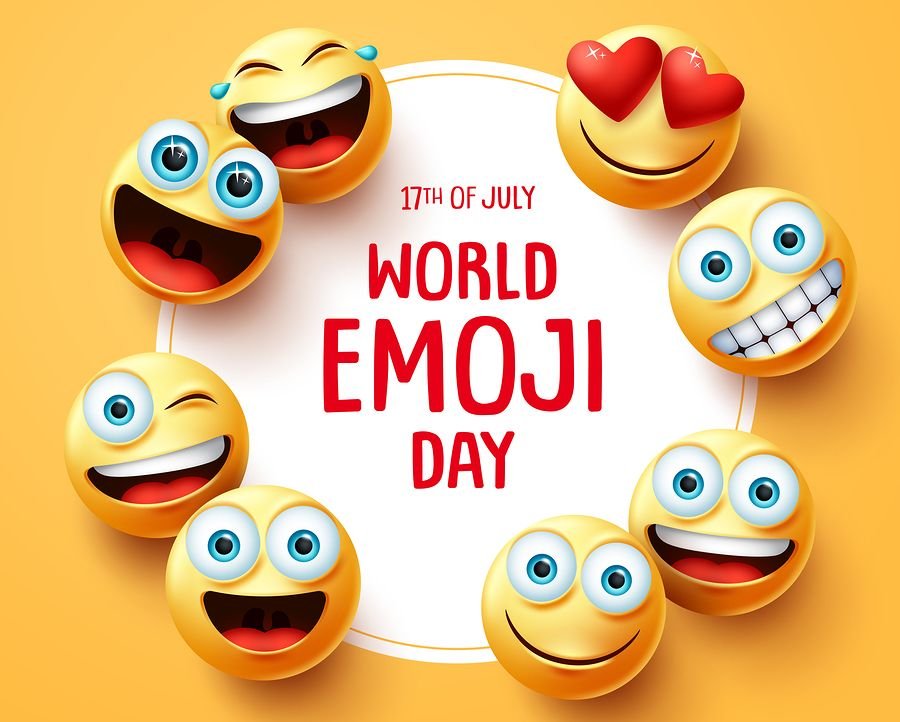
World Emoji Day is an annual unofficial holiday occurring on 17 July, intended to celebrate emoji; in the years since the earliest observance, it has become a popular date to make product or other announcements and releases relating to emoji.
World Emoji Day is “the brainchild of Jeremy Burge” according to CNBC which stated that the “London-based founder of Emojipedia created it” in 2014.
The New York Times reported that Burge created this on 17 July “based on the way the calendar emoji is shown on iPhones”. For the first World Emoji Day, Burge told The Independent “there were no formal plans put in place” other than choosing the date. The Washington Post suggested in 2018 that readers use this day to “communicate with only emoji”.
NBC reported that the day was Twitter’s top trending item on 17 July in 2015. In 2016, Google changed the appearance of Unicode character CALENDAR to display 17 July on Android, Gmail, Hangouts, and Chrome OS products. As of 2020, the majority of major platforms had switched to show July 17 on this emoji, to avoid confusion on World Emoji Day.
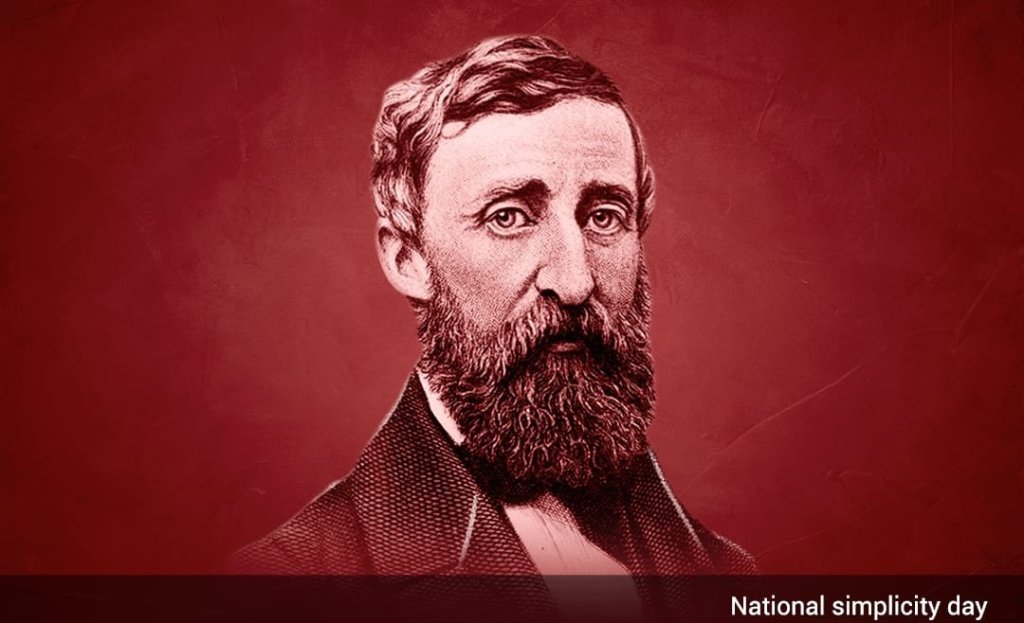
National Simplicity Day is observed every year on July 12 to honour the life, work and philosophies of poet, author and leading transcendentalist Henry David Thoreau. Born on July 12, 1817, Thoreau was an advocate of living a simple life and wrote a number of books around the subject.
World Paper Bag Day (or Paper Bag Day) is celebrated across the globe on July 12 every year to reaffirm the much-needed daily use of paper bags over plastic bags, which apparently came in handy for carrying our groceries and stuff for donkey’s years, to the gross detriment of our environment.
This day of July 12 is dedicated to raising awareness about the use of biodegradable paper bags that are recyclable and made of renewable raw materials. Worldwide, there’s has been awakening of sorts – at the turn of the last century – in terms of the need to curb the usage of plastic bags, which are non-biodegradable or, in simplest terms, take hundreds of years to decompose in landfills.
World Population Day is an annual event, observed on July 11 every year, which seeks to raise awareness of global population issues. The event was established by the Governing Council of the United Nations Development Programme in 1989. It was inspired by the public interest in Five Billion Day on July 11, 1987, the approximate date on which the world’s population reached five billion people.
World Population Day aims to increase people’s awareness on various population issues such as the importance of family planning, gender equality, poverty, maternal health and human rights.
Dilip Kumar (born Mohammed Yusuf Khan; 11 December 1922 – 7 July 2021) was an Indian actor and film producer, best known for his work in Hindi cinema. Referred to as the “Tragedy King” and “The First Khan”, he has been credited with bringing a distinct form of method acting technique to cinema. Kumar held the record for most wins for the Filmfare Award for Best Actor (which was later equalled by Shah Rukh Khan) and was also the inaugural recipient of the award.
Kumar debuted as an actor in the film Jwar Bhata (1944), produced by Bombay Talkies. In a career spanning over five decades, Kumar worked in over 65 films. Kumar is known for roles in films such as the romantic Andaz (1949), the swashbuckling Aan (1952), the social drama Daag (1952), the dramatic Devdas (1955), the comical Azaad (1955), the epic historical Mughal-e-Azam (1960), the social dacoit crime drama Gunga Jamuna (1961), and the comedy Ram Aur Shyam (1967).
In 1976, Kumar took a five-year break from film performances and returned with a character role in the film Kranti (1981) and continued his career playing leading roles in films such as Shakti (1982), Mashaal (1984), Karma (1986) and Saudagar (1991). His last film was Qila (1998).
Kumar was also known for his long relationship with actress and frequent co-star Madhubala that ended due to the Naya Daur court case in 1957. He married actress Saira Banu in 1966 and resided in Bandra, a suburb of Mumbai, till his death in 2021.
World Chocolate Day, sometimes referred to as International Chocolate Day, is an annual celebration of chocolate, occurring globally on July 7 or just Chocolate Day. The observance of World Chocolate Day date back to 2009, and some suggest July 7 in particular celebrates the introduction of chocolate to Europe in 1550.
Other chocolate day celebrations exist, such as National Chocolate Day in the United States on 28 October. The U.S. National Confectioners Association lists 13 September as International Chocolate Day, coinciding with the birth date of Milton S. Hershey (September 13, 1857). Ghana, the second largest producer of cocoa, celebrates Chocolate day on February 14. In Latvia, World Chocolate day is celebrated on July 11.
The U.S. National Confectioners Association lists four primary chocolate holidays on their calendar (Chocolate Day (July 7), two National Chocolate Days (October 28 and December 28), and International Chocolate Day (September 13)), in addition to variants such as National Milk Chocolate Day, National White Chocolate Day, and National Cocoa Day.








 B +Ve!!
You must be logged in to post a comment.