The International Day of Yoga has been celebrated annually on 21 June since 2015, following its inception in the United Nations General Assembly in 2014. Yoga is a physical, mental and spiritual practice which originated in India. The Indian Prime Minister, Narendra Modi, in his UN address in 2014, had suggested the date of 21st June, as it is the longest day of the year in the Northern Hemisphere and shares a special significance in many parts of the world.
Father’s Day is a celebration of fathers and fatherhood. It is celebrated on the third Sunday of June in many countries around the world, including the United States, Canada, and the United Kingdom.
Sand art by Sudarsan Pattnaik
Father’s Day is a holiday of honouring fatherhood and paternal bonds, as well as the influence of fathers in society. In Catholic countries of Europe, it has been celebrated on 19 March as Saint Joseph’s Day since the Middle Ages. In the United States, Father’s Day was founded by Sonora Smart Dodd, and celebrated on the third Sunday of June for the first time in 1910. The day is held on various dates across the world and different regions maintain their own traditions of honouring fatherhood.
Father’s Day is a recognized Public holiday in Lithuania and some parts of Spain, and was regarded as such in Italy until 1977. It is a national holiday in Estonia, Samoa, and equivalently in South Korea, where it is celebrated as Parents’ Day. The holiday complements similar celebrations honouring family members, such as Mother’s Day, Siblings Day, and Grandparents’ Day.
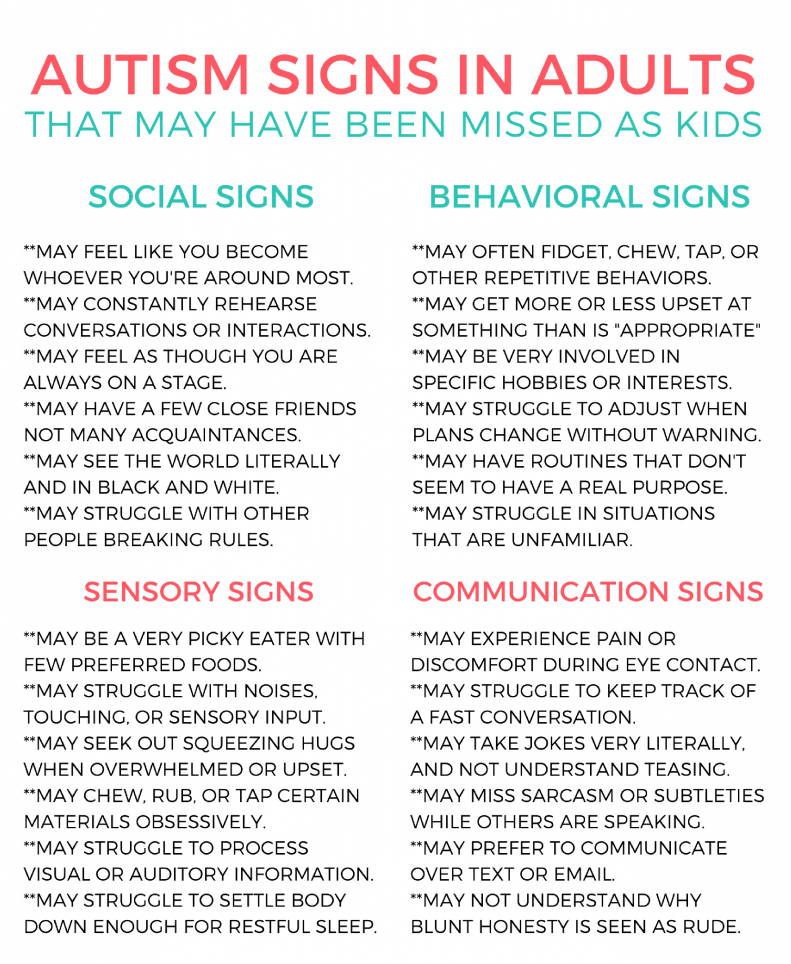
Autistic Pride Day is a pride celebration for autistic people held on June 18 each year. Autistic pride recognises the importance of pride for autistic people and its role in bringing about positive changes in the broader society.
Although Autistic Pride Day is June 18, pride events are often held on the weekend of that year for logistical reasons, but can be held at any time during the year.
Autistic Pride Day was first celebrated in 2005 by Aspies For Freedom (AFF), who selected June 18 because it was the birthday of the youngest member of the group at that time. AFF modelled the celebration on the gay pride movement.
According to Kabie Brook, the co-founder of Autism Rights Group Highland (ARGH), “the most important thing to note about the day is that it is an autistic community event: it originated from and is still led by autistic people ourselves”, i.e. it is not a day for other charities or organisations to promote themselves or stifle autistic people. The rainbow infinity symbol is used as the symbol of this day, representing “diversity with infinite variations and infinite possibilities”. New Scientist magazine released an article entitled “Autistic and proud” on the first Autistic Pride Day that discussed the idea.
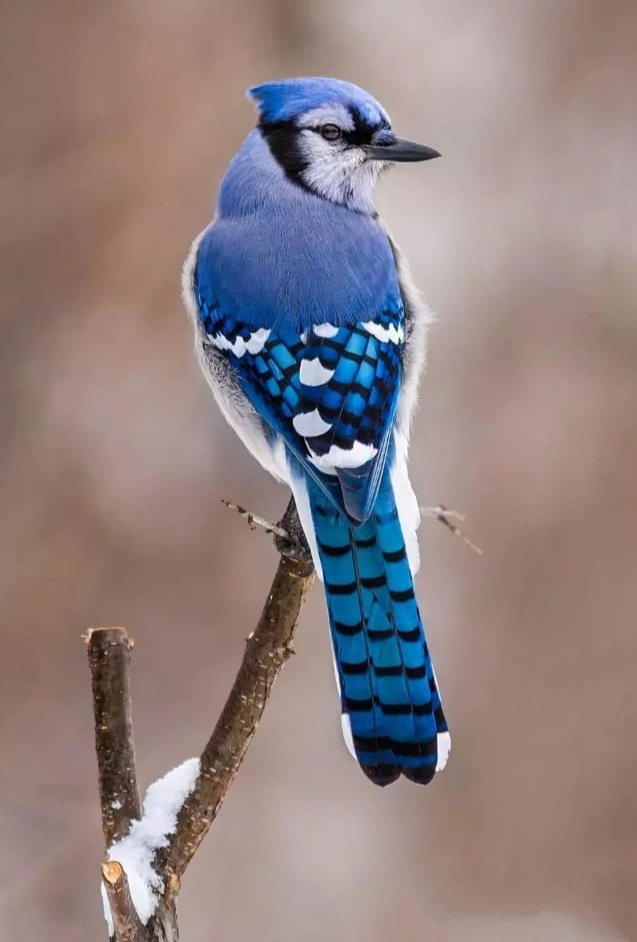
The blue jay (Cyanocitta cristata) is a passerine bird in the family Corvidae, native to eastern North America. It lives in most of the eastern and central United States; eastern populations may be migratory. Resident populations are also found in Newfoundland, Canada; breeding populations are found across southern Canada. It breeds in both deciduous and coniferous forests, and is common in residential areas.
It is predominantly blue, with a white chest and underparts, and a blue crest; it has a black, U-shaped collar around its neck and a black border behind the crest. Males and females are similar in size and plumage, and plumage does not vary throughout the year. Four subspecies have been recognized.
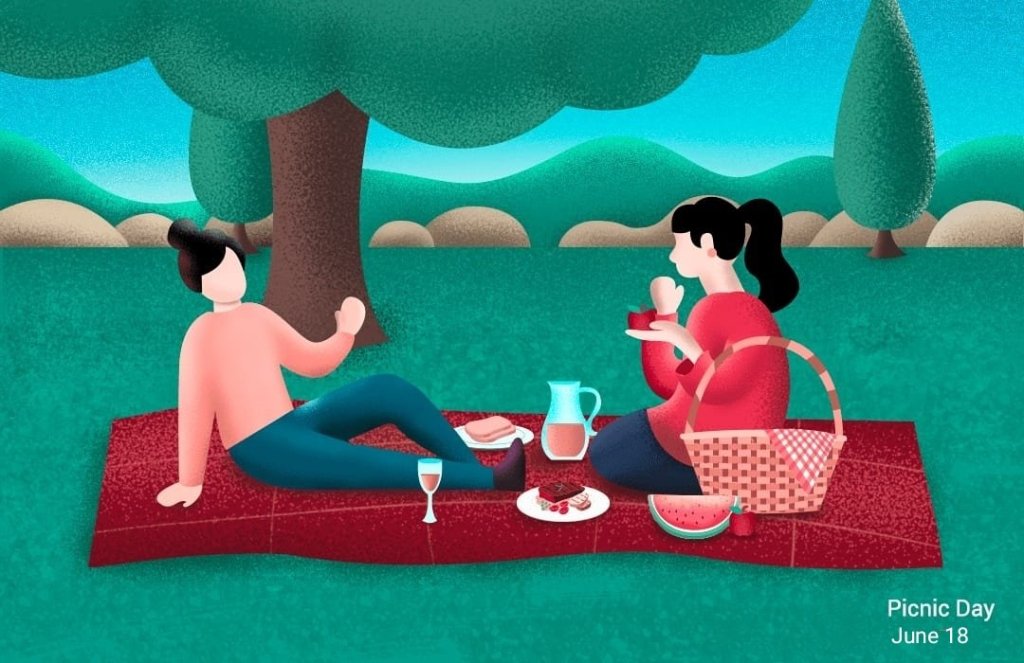
June 18th every year is International Picnic Day. The origins of this event are unknown, but it doesn’t dampen its popularity with many countries across the globe celebrating this event. Although this is more of a fun event rather than your typical fundraising awareness day, it doesn’t make it any less worthwhile to celebrate as what better way to relax and get out of the house?
World Blood Donor Day (WBDD) is held on June 14 each year. The event was organised for the first time in 2005, by a joint initiative of the World Health Organization, the International Federation of Red Cross and Red Crescent Societies to raise awareness of the need for safe blood and blood products, and to thank blood donors for their voluntary, life-saving gifts of blood. World Blood Donor Day is one of 11 official global public health campaigns marked by the World Health Organization (WHO), along with World Health Day, World Chagas Disease Day, World Tuberculosis Day, World Immunization Week, World Patient Safety Day, World Malaria Day, World No Tobacco Day, World Hepatitis Day, World Antimicrobial Awareness Week and World AIDS Day.
Transfusion of blood and blood products helps and save millions of lives every year. It can help patients who suffering from life-threatening conditions live longer and with higher quality of life, and supports complex medical and surgical procedures. It also has an essential, life-saving role in maternal and perinatal care. Access to safe and sufficient blood and blood products can help reduce rates of death and disability due to severe bleeding during delivery and after childbirth.
In many countries, there is not an adequate supply of safe blood, and blood services face the challenge of making sufficient blood available, while also ensuring its quality and safety.
An adequate supply can only be assured through regular donations by voluntary unpaid blood donors. The WHO’s goal is for all countries to obtain all their blood supplies from voluntary unpaid donors by 2020. In 2014, 60 countries have their national blood supplies based on 99-100% voluntary unpaid blood donations, with 73 countries still largely dependent on family and paid donors.
World Blood Donor Day is celebrated every year by people around the world on June 14 which is the birth anniversary of Karl Landsteiner (14 June 1868 – 26 June 1943 ). Landsteiner was awarded the Nobel Prize for his discovery of the ABO blood group system.
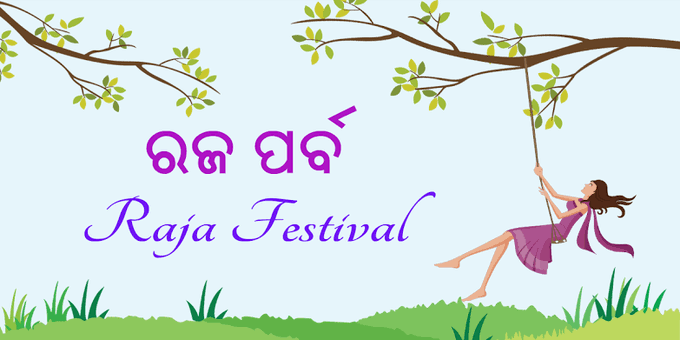
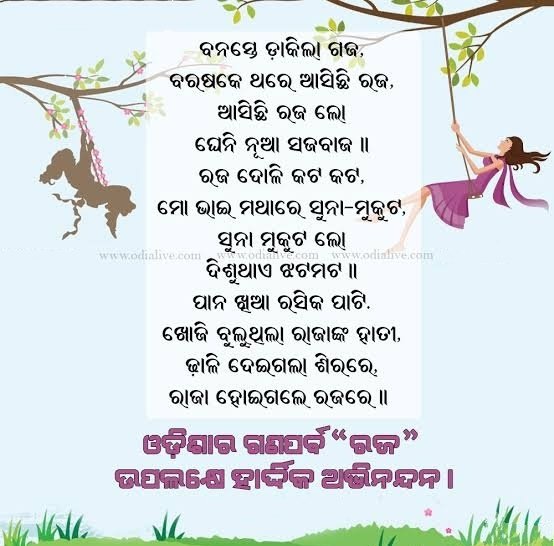
Raja (Odia: ରଜ) or Raja Parba (Odia: ରଜ ପର୍ବ) or Mithuna Sankranti is a three-day-long festival of womanhood celebrated in Odisha, India. The second day of the festival signifies beginning of the solar month of Mithuna from, which the season of rains starts.
It is believed that the mother Goddess Earth or the divine wife of Lord Vishnu undergoes menstruation during the first three days. The fourth day is called Vasumati Snana, or ceremonial bath of Bhudevi. The term Raja came from the Sanskrit word ‘Rajas’ which means menstruation and when a woman menstruates, she is called ‘Rajaswala’ or a menstruating woman, and in medieval times the festival became more popular as an agricultural holiday marking the worship of Bhudevi, who is the wife of lord Jagannath. A silver idol of Bhudevi is still to be found in the Puri Temple beside Lord Jagannath .
It falls in mid June, the first day is called Pahili Raja, second day is Mithuna Sankranti, third day is Bhudaaha or Basi Raja. The final fourth day is called Basumati snana, in which the ladies bath the grinding stone as a symbol of Bhumi with turmeric paste and adore with flower, sindoor etc. All type of seasonal fruits are offered to mother Bhumi. The day before first day is called Sajabaja or preparatory day during which the house, kitchen including grinding stones are cleaned, spices are ground for three days. During these three days women and girls take rest from work and wear new Saree, Alata, and ornaments. It is similar to Ambubachi Mela. The most popular among numerous festivals in Odisha, Raja is celebrated for three consecutive days. Just as the earth prepares itself to quench its thirst by the incoming rain the unmarried girls of the family are groomed for impending matrimony through this festival. They pass these three days in joyous festivity and observe customs like eating only uncooked and nourishing food especially Podapitha, do not take bath or take salt, do not walk barefoot and vow to give birth to healthy children in future. The most vivid and enjoyable memories one has of the Raja gaiety is the rope-swings on big banyan trees and the lyrical folk-songs that one listens from the nubile beauty enjoying the atmosphere.
To celebrate the advent of monsoon, the joyous festival is arranged for three days by the villagers. Though celebrated all over the state it is more enthusiastically observed in all over the Odisha but celebrated with much fervour across the coastal districts. The first day is called “Pahili Raja”, second is “Raja Sankranti” and third is “Bhumi Dahana or Basi Raja”.
According to popular belief as women menstruate, which is a sign of fertility, so also Mother Earth menstruates. So all three days of the festival are considered to be the menstruating period of Mother Earth. During the festival all agricultural operations remain suspended. As a mark of respect towards the Earth during her menstruation days, all agricultural works comes to a standstill during these days. Significantly, it is a festival of the unmarried girls, the potential mothers. They all observe the restrictions prescribed for a menstruating woman. The very first day, they rise before dawn, do their hair, anoint their bodies with turmeric paste and oil and then take the purificatory bath in a river or tank. Peculiarly, bathing for the rest two days is prohibited. They don’t walk bare-foot do not scratch the earth, do not grind, do not tear anything apart, do not cut and do not cook. During all the three consecutive days they are seen in the best of dresses and decorations, eating cakes and rich food at the houses of friends and relatives, spending long cheery hours, moving up and down on improvised swings, rending the village sky with their merry impromptu songs.
The swings are of different varieties, such as ‘Ram Doli’, ‘Charki Doli’, ‘Pata Doli’, ‘Dandi Doli’ etc. Songs specially meant for the festival speak of love, affection, respect, social behaviour and everything of social order that comes to the minds of the singers. Through anonymous and composed extempore, much of these songs, through sheer beauty of diction and sentiment, has earned permanence and has gone to make the very substratum of Odisha’s folk-poetry. While girls thus scatter beauty, grace and music all around, moving up and down on the swings during the festival, young men give themselves to strenuous games and good food, on the eve of the onset of the monsoons, which will not give them even a minute’s respite for practically four months making them one with mud, slush and relentless showers, their spirits keep high with only the hopes of a good harvest. As all agricultural activities remain suspended and a joyous atmosphere pervades, the young men of the village keep themselves busy in various types of country games, the most favourite being ‘Kabadi’. Competitions are also held between different groups of villages. All nights ‘Jatra’ performances or ‘Gotipua’ dances are arranged in prosperous villages where they can afford the professional groups. Enthusiastic amateurs also arrange plays and other kinds of entertainment.
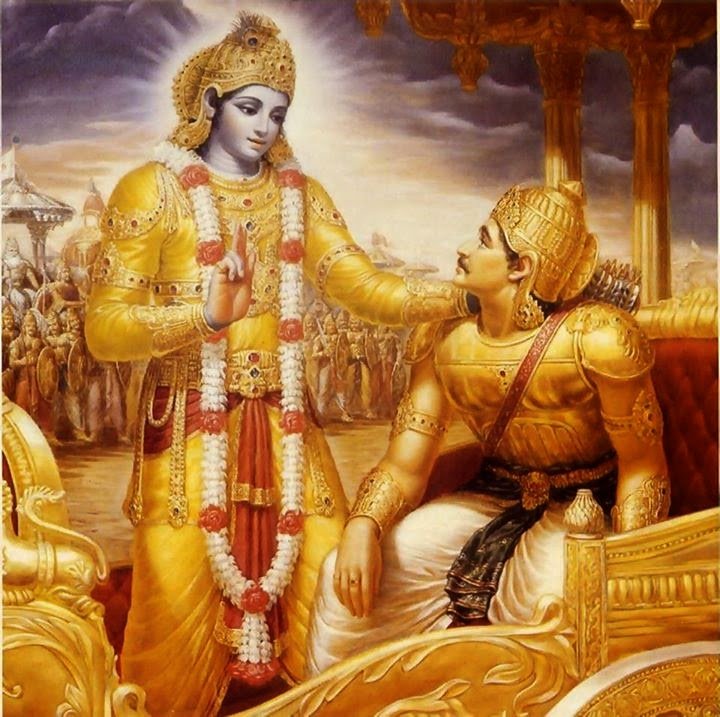
The path to cross the human bondage involves two characteristics namely steadfastness amidst glory and humiliation; as well as equality amongst friends and foes. It can be achieved only if one surpasses the feeling “I-am-the-doer”. (14.25)
जो मान और अपमान में सम है, मित्र और वैरी के पक्ष में भी सम है एवं सम्पूर्ण आरम्भों में कर्तापन के अभिमान से रहित है, वह पुरुष गुणातीत कहा जाता है ॥25॥
The path to cross the human bondage involves two characteristics namely steadfastness amidst glory and humiliation; as well as equality amongst friends and foes. It can be achieved only if one surpasses the feeling “I-am-the-doer”. (14.25)
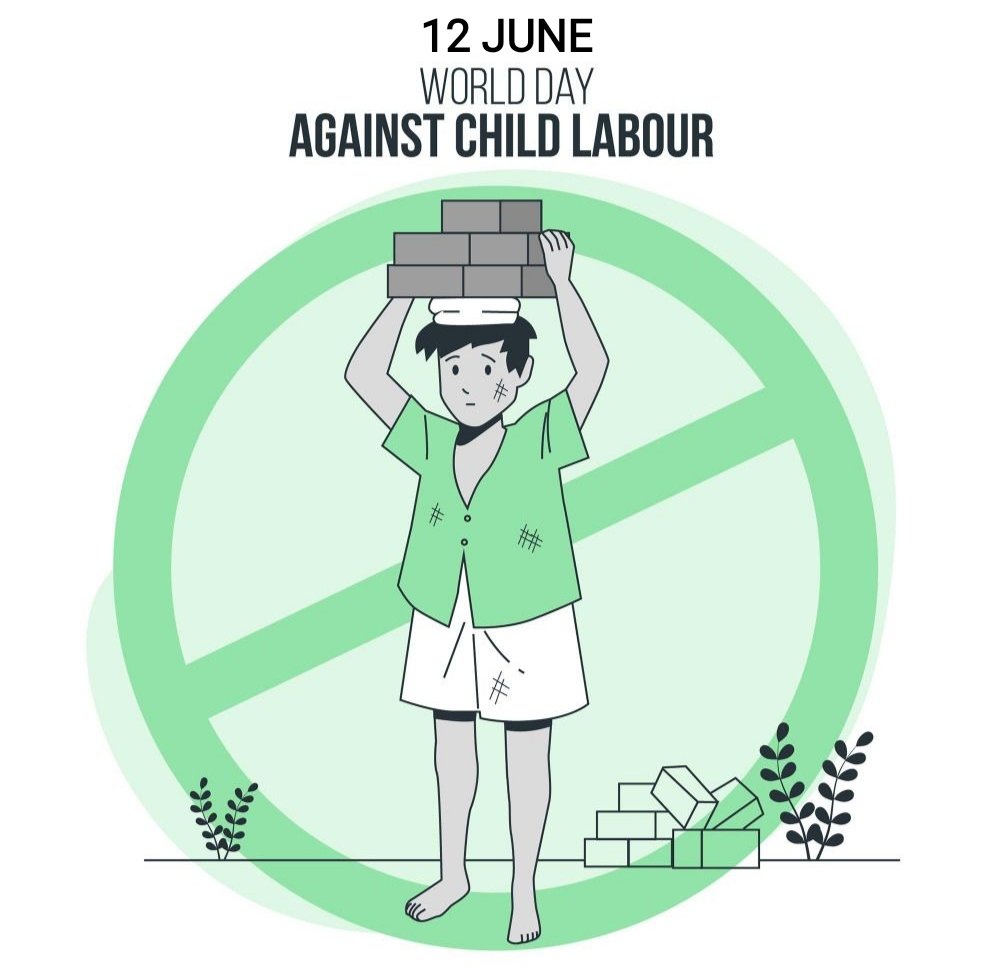
The World Day Against Child Labour is an International Labour Organization (ILO)-sanctioned holiday first launched in 2002 aiming to raise awareness and activism to prevent child labour. It was spurred by ratifications of ILO Convention No. 138 on the minimum age for employment and ILO Convention No. 182 on the worst forms of child labour.
The World Day Against Child Labour, which is held every year on June 12, is intended to foster the worldwide movement against child labour.
Manoj Das (27 February 1934 – 27 April 2021) was an Indian author who wrote in Odia and English. In 2000, Manoj Das was awarded the Saraswati Samman. He was awarded Padma Shri in 2001, the fourth-highest Civilian Award in India, Padma Bhusan in 2020, the third highest Civilian Award in India for his contribution in the field of Literature & Education.
Kendra Sahitya Akademi has bestowed its highest award (also India’s highest literary award) i.e Sahitya Akademi Award Fellowship.
In 1971, his research in the archives of London and Edinburgh brought to light some of the little-known facts of India’s freedom struggle in the first decade of the twentieth century led by Sri Aurobindo for which he received the first Sri Aurobindo Puraskar (Kolkata).
His deeper quest led him to mysticism and he was an inmate of Sri Aurobindo Ashram in Puducherry since 1963 where he taught English Literature and the Philosophy of Sri Aurobindo at the Sri Aurobindo International University.
Notable works: Cyclones A Tiger at Twilight Mystery of the Missing Cap Myths, Legends, Concepts and Literary Antiquities of India













 B +Ve!!
You must be logged in to post a comment.