I am wondering if you have thought about what keeps us going in life. We all have our ups and downs. What motivates us to go up when we are down instead of just staying in the down? I noticed two things that help me with this: meaning and hope. And I often discover that those are already within me and I might lose sight of them at times.
My down times are often characterized with a sense of meaning loss. That is when I feel I don’t have an idea of what I am meant to do and so I can’t do anything. The more I can’t do anything, the more down I feel. Then it becomes a loophole, until I find a meaning somewhere. And somehow, I find that meaning within me. For example, I might go down when I lose the vision for my writing…
“Happiness is something to be discovered within and not outside ”
– Anonymous
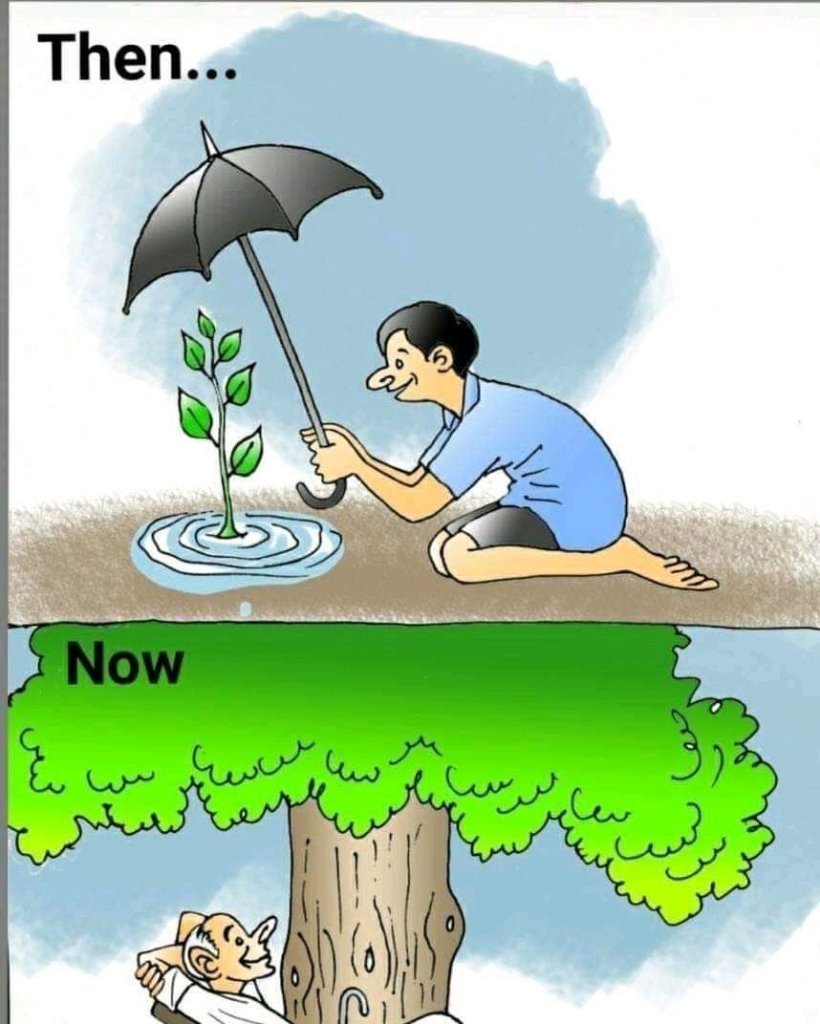
The following image explains a lot on happiness.
Happiness is always there within and a natural tendency of all human beings. I have read and heard people talking about happiness during conversations. Most people I know wants to remain always happy and they don’t want to face insecurity or difficult times. They reject all negative factors coming on the way to our happiness.
Many among us believe difficult times are invited by our own thoughts and deeds. It’s not a byproduct of any action of others in our environment. I like these thoughts as an optimistic approach towards life.
Few other among us think like we are subject to get influenced by others in our environment as human beings are emotional by nature. They talk like we can’t make all happy and it’s better to work for…
stork-billed kingfisher: photo taken at Bhitarkanika National Park
The stork-billed kingfisher (Pelargopsis capensis), is a tree kingfisher which is widely but sparsely distributed in the tropical Indian subcontinent and Southeast Asia, from India to Indonesia. This kingfisher is resident throughout its range.
National Pollution Prevention Day (India): 2nd December
National Pollution Prevention Day is observed on 2nd December in India. This day is observed in the memory of people who lost their lives in Bhopal gas calamity. Bhopal gas tragedy occurred in the year 1984 on the night of 2–3 December.
Pollution prevention protects the environment by conserving and protecting natural resources while strengthening economic growth through more efficient production in industry and less need for households, businesses and communities to handle waste.
Pollution prevention (P2) is a strategy for reducing the amount of waste created and released into the environment, particularly by industrial facilities, agriculture, or consumers. Many large corporations view P2 as a method of improving the efficiency and profitability of production processes by waste reduction and technology advancements. Legislative bodies have enacted P2 measures, such as the Pollution Prevention Act of 1990 and the Clean Air Act Amendments of 1990 by the United States Congress.
The Border Security Force (BSF) is India’s Primary border guarding organisation on its border with Pakistan and Bangladesh. It is one of the three Border Guarding Forces (BGF) of India, and was raised in the wake of the 1965 War on 1 December 1965, “for ensuring the security of the borders of India and for matters connected there with”.
It is a border guarding force charged with guarding India’s land border with Pakistan and Bangladesh during peacetime and preventing transnational crime at the same, it has various active roles during an outbreak of war. It comes under Ministry of Home Affairs. The BSF takes its officers from IPS on deputation at command and leadership levels, from the rank of Deputy Director General (DIG) and above. Retired Brigadiers from the Indian Army are also absorbed at the DIG rank. Its head, designated as a Director-General (DG), is also from the Indian Police Service. However, at the ground level, companies and battalions are led by own cadre officers of BSF who are selected by UPSC as Assistant Commandants.
The BSF has grown exponentially from a few battalions in 1965, to 186 battalions with a sanctioned strength of 257,363 personnel including an expanding air wing, marine wing, an artillery regiment, and commando units. It currently stands as the world’s largest border guarding force. BSF has been termed as the First Line of Defence of Indian Territories.
World AIDS Day, designated on 1 December every year since 1988, is an international day dedicated to raising awareness of the AIDS pandemic caused by the spread of HIV infection and mourning those who have died of the disease. The acquired immunodeficiency syndrome (AIDS) is a life-threatening condition caused by the human immunodeficiency virus (HIV). The HIV virus attacks the immune system of the patient and reduces its resistance to other diseases. Government and health officials, non-governmental organizations, and individuals around the world observe the day, often with education on AIDS prevention and control.
World AIDS Day is one of the eleven official global public health campaigns marked by the World Health Organization (WHO), along with World Health Day, World Blood Donor Day, World Immunization Week, World Tuberculosis Day, World No Tobacco Day, World Malaria Day, World Hepatitis Day, World Antimicrobial Awareness Week, World Patient Safety Day and World Chagas Disease Day.
As of 2017, AIDS has killed between 28.9 million and 41.5 million people worldwide, and an estimated 36.7 million people are living with HIV, making it one of the most important global public health issues in recorded history. Thanks to recent improved access to antiretroviral treatment in many regions of the world, the death rate from AIDS epidemic has decreased since its peak in 2005 (1 million in 2016, compared to 1.9 million in 2005).
All the World AIDS Day campaigns focus on a specific theme, chosen following consultations with UNAIDS, WHO, and a large number of grassroots, national and international agencies involved in the prevention and treatment of HIV/AIDS. As of 2008, each year’s theme is chosen by the Global Steering Committee of the World AIDS Campaign (WAC).
For each World AIDS Day from 2005 through 2010, the theme was “Stop AIDS. Keep the Promise”, designed to encourage political leaders to keep their commitment to achieving universal access to HIV/AIDS prevention, treatment, care, and support by the year 2010.
As of 2012, the multi-year theme for World AIDS Day is “Getting to Zero: Zero new HIV infections. Zero deaths from AIDS-related illness. Zero discrimination.” The US Federal theme for the year 2014 is “Focus, Partner, Achieve: An AIDS-Free Generation”.
The themes are not limited to a single day but are used year-round in international efforts to highlight HIV/AIDS awareness within the context of other major global events including the G8 Summit, as well as local campaigns like the Student Stop AIDS Campaign in the UK.
Theme for 2020: Global solidarity shared responsibility
Let’s be more caring and responsible as human beings!
They eat tasty and palatable food which promotes longevity, health, intelligence, joy and love and which nourishes and sustain them. (17.8)
आयु, बुद्धि, बल, आरोग्य, सुख और प्रीति को बढ़ाने वाले, रसयुक्त, चिकने और स्थिर रहने वाले (जिस भोजन का सार शरीर में बहुत काल तक रहता है, उसको स्थिर रहने वाला कहते हैं।) तथा स्वभाव से ही मन को प्रिय- ऐसे आहार अर्थात् भोजन करने के पदार्थ सात्त्विक पुरुष को प्रिय होते हैं ॥8॥
They eat tasty and palatable food which promotes longevity, health, intelligence, joy and love and which nourishes and sustain them. (17.8)
You must be logged in to post a comment.