A religious person was passing by and heard the man’s voice from the hole.
The religious person said: “You probably sinned, and now this happened to you as a payback. God wants you to confess your sins. I will sit here and pray for you.”
An educated person was passing by and went towards the voice. He measured the depth of the hole, checked the quality of the dirt, and started to think.
A journalist passed by and said: “So many things I have seen which were worst than your condition.”
A yoga instructor passed by and said: “This hole and the pain you are in are just in your mind, and you can clear your concentration and find peace.”
A leader shall have confidence in his team. Having assessed the strength of both the armies, the king Duryodhana concludes that the kaurava army, led by Bhishma, is more powerful than the Pandava army, protected as it is by Bhima. (1.10)
भीष्म पितामह द्वारा रक्षित हमारी वह सेना सब प्रकार से अजेय है और भीम द्वारा रक्षित इन लोगों की यह सेना जीतने में सुगम है ॥10॥
~ श्लोक 10 – अध्याय 1 – कुरुक्षेत्र के युद्धस्थल में सैन्य निरिक्षण
A leader shall have confidence in his team. Having assessed the strength of both the armies, the king Duryodhana concludes that the kaurava army, led by Bhishma, is more powerful than the Pandava army, protected as it is by Bhima. (1.10)
In solitude, I found the self that in crowds I lost— A piece that in sanity, could not exist in peace, Alone; a controversy, to even I, who in its pool, Swam; I, who in its robe, clothed from cold.
There was a time before, and before before; A time when knots of strange could unwind, A time of transition from self to something, A time of understanding little to nothing.
There was a time before, and before before; A time when the world swam, swam around me, A time when I blinked and days passed not. Now, drifting, so strange is every concept.
I want not much but time with self—a headless self, With less thoughts of less self, and less noises in self… About the world, from the world, singing, crying… About this, about that, that I am weary of.
International Men’s Day (IMD) is an annual international event celebrated on the 19th of November. The objectives of celebrating an International Men’s Day are set out in ‘The Six Pillars of International Men’s Day’. It is an occasion to celebrate boys’ and men’s achievements and contributions, in particular for their contributions to nation, society, community, family, marriage, and childcare. The broader and ultimate aim of the event is to promote basic humanitarian values.
Inaugurated in 1992 on 7 February by Thomas Oaster, the project of International Men’s Day was conceived one year earlier on 8 February 1991. The project was re-initialised in 1999 in Trinidad and Tobago. The longest running celebration of International Men’s Day is Malta, where events have occurred since 7 February 1994.
Jerome Teelucksingh, who revived the event, chose 19 November to honour his father’s birthday and also to celebrate how on that date in 1989 Trinidad and Tobago’s football team had united the country with their endeavours to qualify for the World Cup. Teelucksingh has promoted International Men’s Day as not just a gendered day but a day where all issues affecting men and boys can be addressed. He has said of IMD and its grass roots activists, “They are striving for gender equality and patiently attempt to remove the negative images and the stigma associated with men in our society”.
Start the day out with a cup of warm water and the juice of half a lemon. It’s so simple and the benefits are just too good to ignore.
Here are a few benefits of drinking lemon water :
Boosts Your Immune System – Lemons are high in Vitamin C and potassium. Vitamin C is great for fighting colds and potassium stimulates brain and nerve function and helps control blood pressure.
Balances PH – Lemons are an incredibly alkaline food, believe it or not. Yes, they are acidic on their own, but inside our bodies they are alkaline (the citric acid does not create acidity in the body once metabolised). As you wellness warriors know, an alkaline body is really the key to good health.
Helps with Weight Loss – Lemons are high in pectin fibre, which helps fight hunger cravings. It also has been shown that people who maintain…
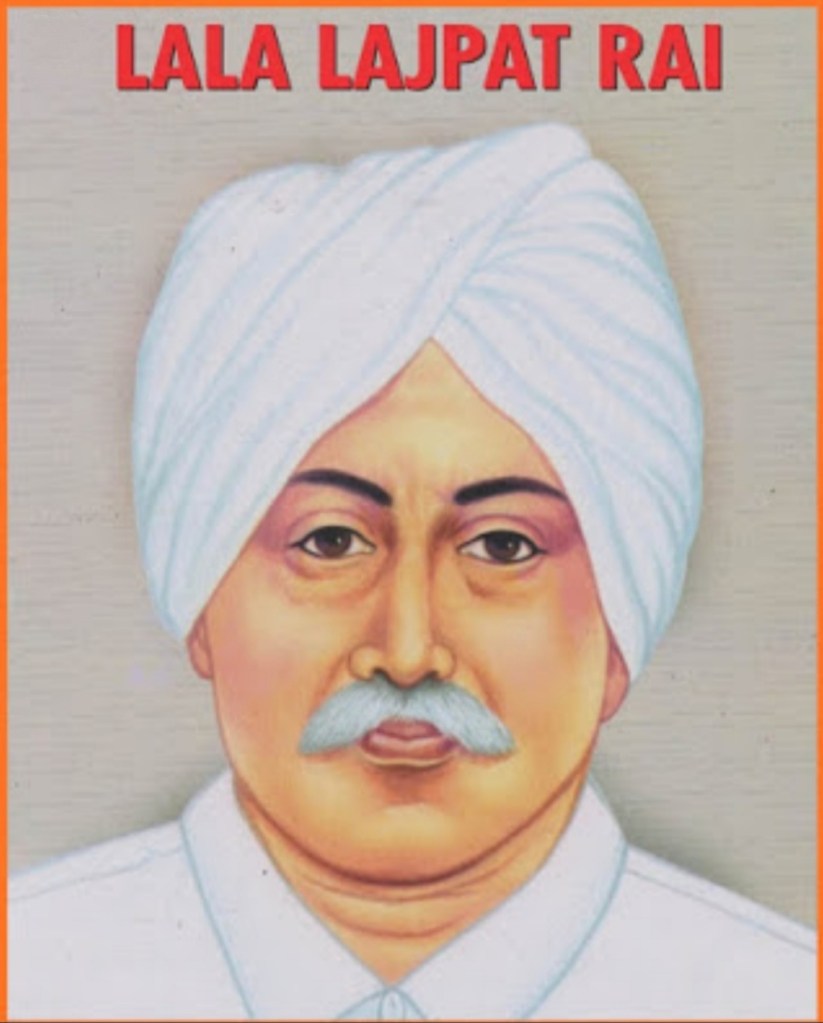
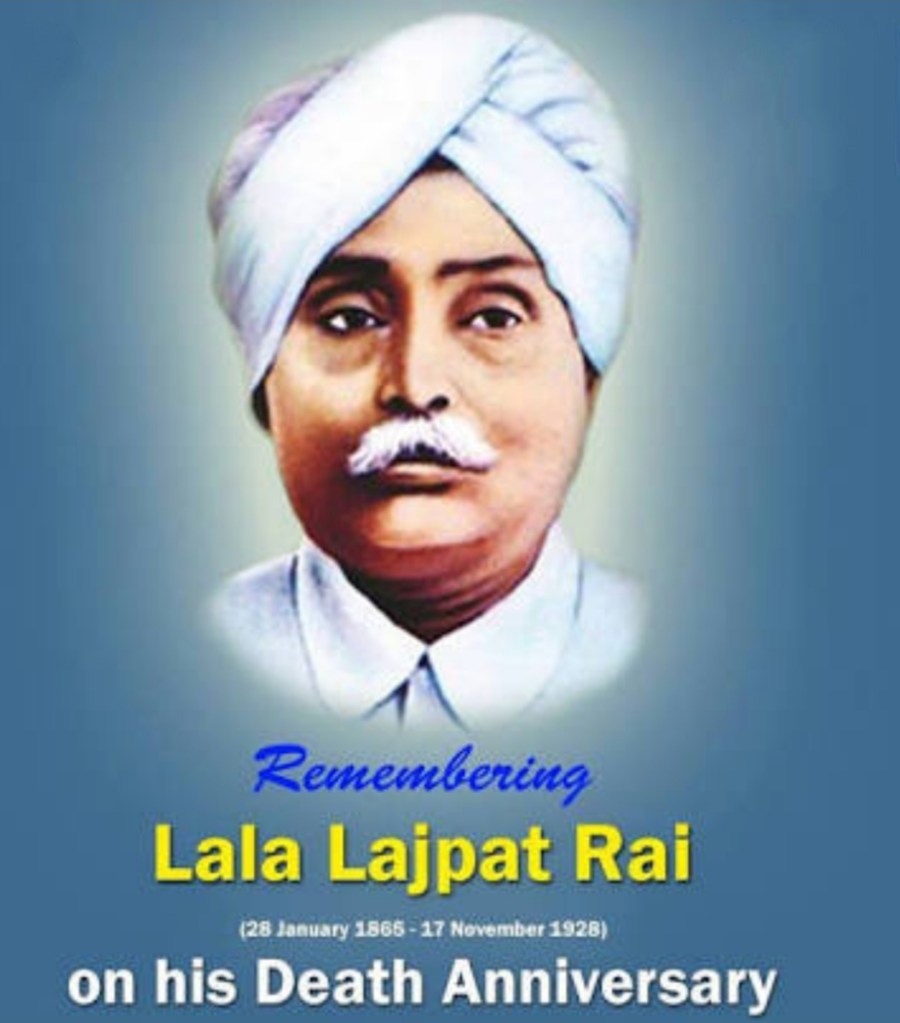
Lala Lajpat Rai was an Indian freedom fighter. He played a pivotal role in the Indian Independence movement. He was popularly known as Punjab Kesari. He was one of the three Lal Bal Pal triumvirate. He was also associated with activities of Punjab National Bank and Lakshmi Insurance Company in their early stages in 1894.
Lala Lajpat Rai
After joining the Indian National Congress and taking part in political agitation in Punjab, Lala Lajpat Rai was deported to Mandalay, Bud that there was insufficient evidence to hold him for subversion. Lajpat Rai’s supporters attempted to secure his election to the presidency of the party session at Surat in December 1907, but he did not succeed.
Graduates of the National College, which he founded inside the Bradlaugh Hall at Lahore as an alternative to British institutions, included Bhagat Singh. He was elected President of the Indian National Congress in the Calcutta Special Session of 1920. In 1921, he founded Servants of the People Society, a non-profit welfare organisation, in Lahore, which shifted its base to Delhi after partition, and has branches in many parts of India. According to him, Hindu society needs to fight its own battle with caste system, position of women and untouchability.
Vedas were an important part of Hindu religion but the lower caste were not allowed to read them. Lala Lajpat Rai approved that the lower caste should be allowed to read them and recite the mantras. He believed that everyone should be allowed to read and learn from the Vedas.
In 1928, the British government set up the Commission, headed by Sir John Simon (Later, Lord Simon, 1st Viscount Simon) to report on the political situation in India. The Indian political parties boycotted the Commission, because it did not include a single Indian in its membership, and it met with country-wide protests. When the Commission visited Lahore on 30 October 1928, Lajpat Rai led a non-violent march in protest against it. The protesters chanted “Simon go back” and carried black flags.
The superintendent of police, James A. Scott, ordered the police to lathi (baton) charge the protesters and personally assaulted Rai. Despite being extremely injured, Rai subsequently addressed the crowd and said, “I declare that the blows struck at me today will be the last nails in the coffin of British rule in India”.
Along with founding Arya Gazaette as its editor, he regularly contributed to several major Hindi, Punjabi, English and Urdu newspapers and magazines. He also authored the following published books.
– The Story of My Deportation, 1908. – Arya Samaj, 1915. – The United States of America: A Hindu’s Impression, 1916. – The problem of National Education in India, 1920. – Unhappy India, 1928. – England’s Debt to India, 1917.
– Autobiographical Writings He wrote biographies of Mazzini, Garibaldi,Shivaji,and Shrikrishna.
– Young India: An Interpretation and a History of the Nationalist Movement from Within. New York: B.W. Huebsch, 1916.
– The Collected Works of Lala Lajpat Rai, Volume 1 to Volume 15, edited by B.R. Nanda.



























 B +Ve!!
You must be logged in to post a comment.