“Who knows why life unfolds the way it does: why we choose one path or another, share the way for a while or a day, then say goodbye. There is no predictability here, and less control that we might wish. But there is a quiet urging of the heart, the knowing in the soul, the wisdom that’s beneath the mind, accessible if we breathe and turn inside.
When the tide of change rolls in we can resist or be at peace, struggle or release. The stuff of life may not be ours to understand. It’s enough to offer love, to receive the best and worst, to embrace and say farewell. What matters most is to celebrate each moment of the journey.”
~ Danna Faulds “Celebrate the Journey” taken from One Soul
As we give our best, give our love, and trust in the quiet…
Father’s Day is a celebration of fathers and fatherhood. It is celebrated on the third Sunday of June in many countries around the world, including the United States, Canada, and the United Kingdom.
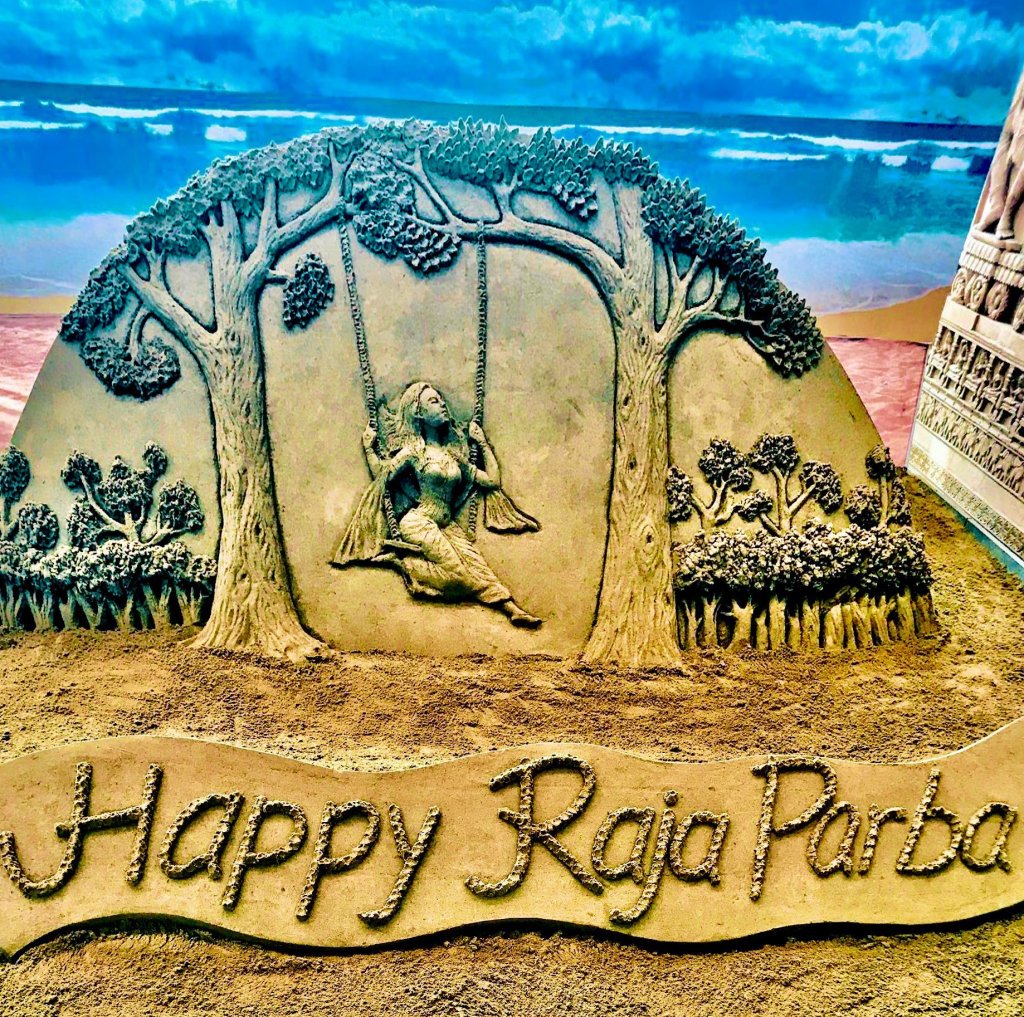
Sand art by Sudarsan Pattnaik
Father’s Day is a holiday of honouring fatherhood and paternal bonds, as well as the influence of fathers in society. In Catholic countries of Europe, it has been celebrated on 19 March as Saint Joseph’s Day since the Middle Ages. In the United States, Father’s Day was founded by Sonora Smart Dodd, and celebrated on the third Sunday of June for the first time in 1910. The day is held on various dates across the world and different regions maintain their own traditions of honouring fatherhood.
Father’s Day is a recognized Public holiday in Lithuania and some parts of Spain, and was regarded as such in Italy until 1977. It is a…
Song Heading : Tumhe Dil Se Kaise Juda Hum Karenge Singers : Anuradha Paudwal, Mohammed Aziz Song Lyricists : Anand Bakshi Music Composer/Director : Anu Malik
Lyrics In Hindi :
तुम्हे दिल से कैसे जुदा हम करेंगे तुम्हे दिल से कैसे जुदा हम करेंगे की मर जायेंगे और क्या हम करेंगे की मर जायेंगे और क्या हम करेंगे तुम्हे दिल से कैसे जुदा हम करेंगे तुम्हे दिल से कैसे जुदा हम करेंगे की मर जायेंगे और क्या हम करेंगे की मर जायेंगे और क्या हम करेंगे तुम्हे दिल से कैसे जुदा हम करेंगे तुम्हे दिल से कैसे जुदा हम करेंगे
कभी प्यार दिल से निकलता नहीं वफाओ का मौसम बदलता नहीं कभी प्यार दिल से निकलता नहीं वफाओ का मौसम बदलता नहीं वफा हमने की है वफा हम करेंगे वफा हमने की है वफा हम करेंगे की मर जायेंगे और क्या हम करेंगे की मर जायेंगे और क्या हम करेंगे तुम्हे दिल से कैसे जुदा हम करेंगे तुम्हे दिल से कैसे जुदा हम करेंगे
सजा प्यार की मौत से कम नहीं है सजा प्यार की मौत से कम नहीं है मगर इस सजा का हमें गम नहीं है सजा प्यार की मौत से कम नहीं है सजा प्यार की मौत से कम नहीं है मगर इस सजा का हमें गम नहीं है खता ही सही ये खता हम करेंगे खता ही सही ये खता हम करेंगे की मर जायेंगे और क्या हम करेंगे की मर जायेंगे और क्या हम करेंगे तुम्हे दिल से कैसे जुदा हम करेंगे तुम्हे दिल से कैसे जुदा हम करेंगे
किसी दिन हमें आजमाये ये दुनिया मोहब्बत की कीमत बताये ये दुनिया किसी दिन हमें आजमाये ये दुनिया मोहब्बत की कीमत बताये ये दुनिया मोहब्बत की कीमत अदा हम करेंगे मोहब्बत की कीमत अदा हम करेंगे की मर जायेंगे और क्या हम करेंगे की मर जायेंगे और क्या हम करेंगे तुम्हे दिल से कैसे जुदा हम करेंगे तुम्हे दिल से कैसे जुदा हम करेंगे
Lyrics In English :-
Tumhein Dil Se Kaise Juda Hum Karenge Tumhein Dil Se Kaise Juda Hum Karenge Ki Mar Jayenge Aur Kya Hum Karenge Ki Mar Jayenge Aur Kya Hum Karenge Tumhein Dil Se Kaise Juda Hum Karenge Tumhein Dil Se Kaise Juda Hum Karenge Ki Mar Jayenge Aur Kya Hum Karenge Ki Mar Jayenge Aur Kya Hum Karenge Tumhein Dil Se Kaise Juda Hum Karenge Tumhein Dil Se Kaise Juda Hum Karenge
Kabhi Pyar Dil Se Nikalta Nahi Wafao Ka Mausam Badalta Nahi Kabhi Pyar Dil Se Nikalta Nahi Wafao Ka Mausam Badalta Nahi Wafa Humne Ki Hai Wafa Hum Karenge Wafa Humne Ki Hai Wafa Hum Karenge Ki Mar Jayenge Aur Kya Hum Karenge Ki Mar Jayenge Aur Kya Hum Karenge Tumhein Dil Se Kaise Juda Hum Karenge Tumhein Dil Se Kaise Juda Hum Karenge
Saja Pyar Ki Maut Se Kam Nahi Hai Saja Pyar Ki Maut Se Kam Nahi Hai Magar Is Saja Ka Hume Gum Nahi Hai Saja Pyar Ki Maut Se Kam Nahi Hai Saja Pyar Ki Maut Se Kam Nahi Hai Magar Is Saja Ka Hume Gum Nahi Hai Khata Hi Sahi Ye Khata Hum Karenge Khata Hi Sahi Ye Khata Hum Karenge Ki Mar Jayenge Aur Kya Hum Karenge Ki Mar Jayenge Aur Kya Hum Karenge Tumhein Dil Se Kaise Juda Hum Karenge Tumhein Dil Se Kaise Juda Hum Karenge
Kisi Din Hume Aajmaye Ye Duniya Mohabbat Ki Kimat Bataye Ye Duniya Kisi Din Hume Aajmaye Ye Duniya Mohabbat Ki Kimat Bataye Ye Duniya Mohabbat Ki Kimat Ada Hum Karenge Mohabbat Ki Kimat Ada Hum Karenge Ki Mar Jayenge Aur Kya Hum Karenge Ki Mar Jayenge Aur Kya Hum Karenge Tumhe Dil Se Kaise Juda Ham Karenge Tumhe Dil Se Kaise Juda Ham Karenge
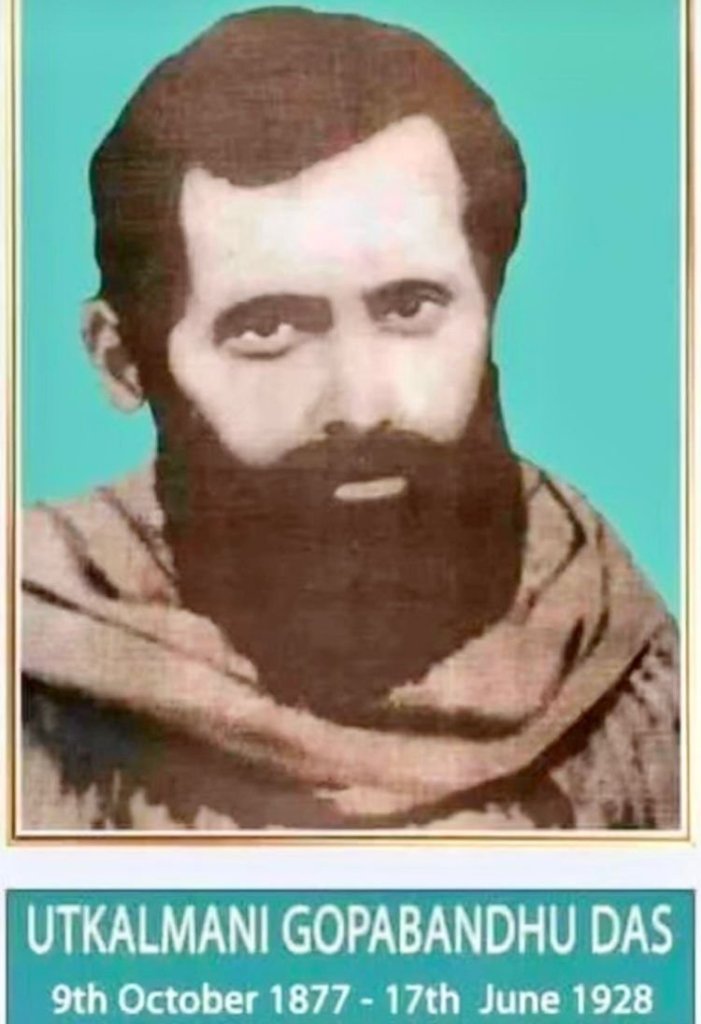
Gopabandhu Das (1877–1928), popularly known as Utkalamani Gopabandhu Das (Jewel of Utkal or Odisha), was a social worker, reformer, political activist, journalist, poet and essayist.
Indian Postage Stamp
Gopabandhu Das was born on 9 October 1877 in Suando village, near Puri, Odisha in a Brahmin family. His mother was Swarnamayee Devi, the third wife of Daitari Dash. His father was a mukhtiar and the family were reasonably well-off. Das married Apti at the age of twelve but continued his education. He had basic schooling in the village before progressing to a middle school nearby. Then, in 1893, by which time his mother had died, Das joined Puri Zilla School. There he was influenced by Mukhtiar Ramchandra Das, a teacher who was both a nationalist and a proponent of public service in aid of people in distress. Becoming organising his fellow children in the spirit of co-operation, the inadequate response of authorities for the victims of an outbreak of cholera prompted him to start a voluntary corps called Puri Sava Samiti. Its members helped those suffering from the outbreak and also cremated the dead.
Das, whose father by now had died, progressed to Ravenshaw College in Cuttack. He became a regular contributor to local literary magazines called Indradhanu and Bijuli, where he argued that any modern literary movement, just like any modern nation, could not be a clean break with the old but rather had to acknowledge and base itself on its past. In one instance, he submitted a satirical poem that so enraged the Inspector of Schools that Das was punished when he refused to apologise for it.
It was while at Ravenshaw that Das started a discussion group, called Kartavya Bodhini Samiti (Duty Awakening Society), in which he and his friends considered social, economic and political problems. It was also during this time, in 1903, that he attended a meeting of the Utkal Sammilani (Utkal Union Conference), where he disagreed with Madhusudan Das’s suggestion that Odia speaking areas should be amalgamated with the Bengal Presidency. These extra-curricular activities, which also included helping the victims of flooding, impacted on his academic studies such that he failed his degree examination, although he gained his BA at the second attempt. It was also while at Ravenshaw that his new-born son died; he explained his preference to deal with flood victims on that occasion rather than be with his sick son as being because “There are so many to look after my son. What more can I do? But there are so many people crying for help in the affected areas and it is my duty to go there. Lord Jagannath is here to take care of the boy”.
Das progressed to Calcutta University, where he obtained an MA and LL.B while simultaneously devoting much of his energies in attempts to improve the education of Oriya people who were living in the city, for whom he opened night schools. His desire to bring about social reform and educational improvements was influenced at this time by the philosophy of the Swadeshi movement. His wife died on the day he heard that he had passed his law examinations. Now aged 28, all of his three sons had died and he chose to give up care of his two daughters to an older brother, along with his share of property in Suando.
Das arrived at his first job as a teacher in Nilagiri in Balasore district of ODISHA. He then became a lawyer, variously described as being based in Puri and in Cuttack. In 1909, Madhusudan Das appointed him to be State Pleader for the princely state of Mayurbhanj.
In 1913 or 1915, Das launched and acted as editor for a short-lived monthly literary magazine titled Satyabadi from the campus of his school. Through this he was able to indulge his childhood aspirations to be a poet, while contributions also came from other members of the school’s staff, including Nilakantha Das and Godabarish Mishra.
A few of his literary works are as follows: – Karakabita – Bandira Atmakatha (Translated as The prisoner’s auto biography in 1946) – Dhramapada (in Odia) – Abakasa-chinta (in Odia) by Satyabadi Press
Gopabandhu became All India Vice-president of the Lok Sevak Mandal in April 1928. He became ill while attending a society meeting in Lahore and died on 17 June 1928.
Brahmananda Satapathy, a professor of political science, has said of Das that “His crusade against untouchability, advocacy of widow remarriage, campaign for literacy, new model of education, stress on both rights and duties, emphasis on women education, particularly vocational training and above all a deep commitment and compassion for poor and destitutes have immortalised him in Orissa and India”.
He had a heart, he said one of stone He locked its gate with an iron lock Flocked on its boundary were silver thorns But it was once filled with brilliant thoughts
He remembers days when he was young He had people who loved him well He had everyone, even two-three friends But he was left with none in the end
It was then he learned the world’s unkind ways From then on he was never the same His little fragile heart was thrown away in flame He became the fire in the midst of pain
Now people look at him then they say How cold he is to our earthly ways They can’t see his past drenched in rain The little boy that still is behind the gate
When we think about spirituality, it’s easy to get overwhelmed by all the different paths that are available.
With so many teachings and practices out there, how do we know which one is the “right” one? How do we avoid getting lost on the wrong path? In this post, I want to talk about the risks of being on the wrong spiritual path, and why it’s important to choose wisely.
Imagine that you’re on a road trip. You have a map and a clear destination in mind, but as you start driving, you notice that there are a lot of different roads to choose from. Some are well paved and well lit, while others are rough and unmarked. You have to make a decision: Which road do you choose?
Choosing the wrong spiritual path is like choosing the wrong road. Just like a poorly marked road can lead you in…
Raja (Odia: ରଜ) or Raja Parba (Odia: ରଜ ପର୍ବ) or Mithuna Sankranti is a three-day-long festival of womanhood celebrated in Odisha, India. The second day of the festival signifies beginning of the solar month of Mithuna from, which the season of rains starts.
It is believed that the mother Goddess Earth or the divine wife of Lord Vishnu undergoes menstruation during the first three days. The fourth day is called Vasumati Snana, or ceremonial bath of Bhudevi. The term Raja came from the Sanskrit word ‘Rajas’ which means menstruation and when a woman menstruates, she is called ‘Rajaswala’ or a menstruating woman, and in medieval times the festival became more popular as an agricultural holiday marking the worship of Bhudevi, who is the wife of lord Jagannath. A silver idol of Bhudevi is still to be found in the Puri Temple beside Lord Jagannath .



















 B +Ve!!
You must be logged in to post a comment.