It is celebrated as tribute to the Indian engineer and Bharat Ratna Sir Mokshagundam Viswesvaraya (popularly known as Sir MV).
Sir Mokshagundam Visvesvaraya (15 September 1860 – 14 April 1962), more commonly known as Sir MV, was an Indian civil engineer, statesman and the 19th Diwan of Mysore, serving from 1912 to 1919. He started his primary education in Bangalore,still that stands as United Mission School and he pursued his degree from one of the best and the 3rd oldest engineering college in Asia, College of Engineering, Pune. He received India’s highest honour, the Bharat Ratna, in 1955.
He was knighted as a Knight Commander of the British Indian Empire (KCIE) by King George V for his contributions to the public good. His birthday, 15 September, is celebrated as Engineers’ Day in India, Sri Lanka and Tanzania in his memory. He was the Chief Engineer of Krishna Raja Sagara dam…
Grandparents Day is an official national holiday, signed by President Carter in 1978 and celebrated on the first Sunday after Labor Day. In 1970, Marian McQuade began a campaign to establish a special day of recognition for grandparents. Through her efforts, she reached out to the civic, business, faith, and political leaders and began a statewide campaign for Grandparents Day.
Grandparents’ Day or National Grandparents’ Day is a secular holiday celebrated in various countries; it is celebrated to show the bond between grandparents and grandchildren. It occurs on various days of the year, either as one holiday or sometimes as a separate Grandmothers’ Day and Grandfather’s Day.
The proclamation, establishing National Grandparents Day stated three distinct purposes: To honor grandparents; To give grandparents an opportunity to show love for their children’s children; To help children become aware of strength, information and guidance older people can offer.
Grandparents Day is a day for celebrating the connections between the generations, and its origin was decidedly noncommercial. The holiday has remained fairly true to its roots. A few ways to celebrate include meals or shared activities like playing cards, going for a walk, or just visiting over a cup of tea.
Now, just imagine. While you were doing this exercise, someone took their last breath and someone took their first.
I find this entire world mind boggling!
•
Access this and other poems in my book, “Dreaming in a Fish Bowl”!
World Suicide Prevention Day (WSPD) is an awareness day observed on 10 September every year, in order to provide worldwide commitment and action to prevent suicides, with various activities around the world since 2003.
The International Association for Suicide Prevention (IASP) collaborates with the World Health Organization (WHO) and the World Federation for Mental Health (WFMH) to host World Suicide Prevention Day. In 2011 an estimated 40 countries held awareness events to mark the occasion.
According to WHO’s Mental Health Atlas released in 2014, no low-income country reported having a national suicide prevention strategy, while less than 100% of lower-middle income countries, and almost a third of upper-middle and high-income countries had.
Crash into my heart and mind Endless always undefined Light of love, purely divine Eternal rays of sunshine Sacred touch made to entwine Tenderness makes all hearts kind Infinite bliss that unblinds Always prepared to align Linking paths to form designs
Visuals form awesome shrines Inspires then redefines Serene forces well combined Inner strength flies unconfined Outer views become refined Never-ending hopes incline Supreme source makes life feel fine
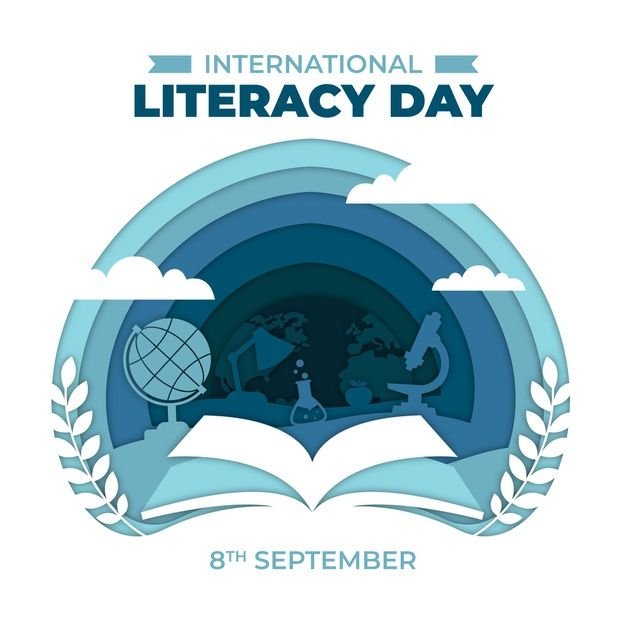
International Literacy Day is an international observance, celebrated each year on 8 September, that was declared by UNESCO on 26 October 1966 at the 14th session of UNESCO’s General Conference.
It was celebrated for the first time in 1967. Its aim is to highlight the importance of literacy to individuals, communities and societies. Celebrations take place in several countries.
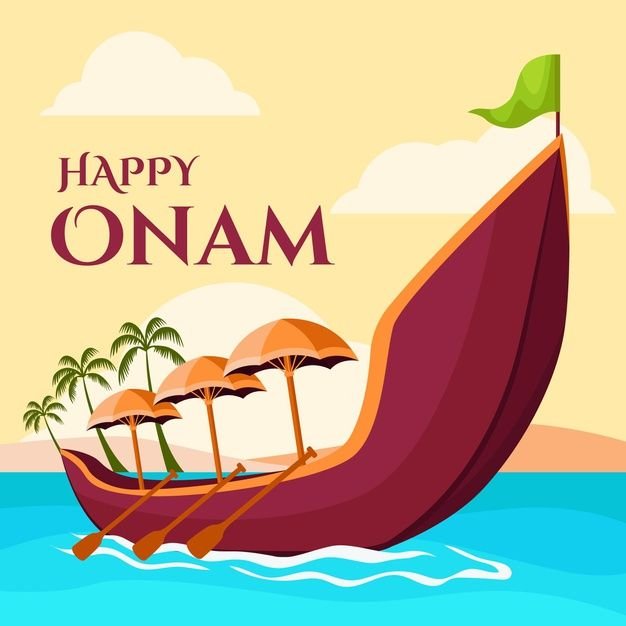
Onam is a festival celebrated by Malayalis in Kerala and at all other part of the world to mark the homecoming of the Great King Mahabali. It is also said to mark the harvest season for Kerala. The festival lasts for ten days and is celebrated with a great splendour.
Feasts, colourful masks, performances and boat races will be held during a 10-day celebration. For 10 days starting tuesday (30 August – 8 September), Onam celebrations will take place across the South Indian state of Kerala as well as among Malayali communities around the world.
Onam festival is celebrated to honour the kind-hearted and much-beloved demon King Mahabali, who is believed to return to Kerala during this festival. According to Vaishnava mythology, King Mahabali defeated the Gods and began ruling over all three worlds. King Mahabali was a demon king who belonged to the Asura tribe.
Onam is an annual cultural festival, in the Indian state of Kerala. A major annual event for Keralites, it is the official festival of the state and includes a spectrum of cultural events. Drawing from Hindu tradition, Onam commemorates King Mahabali and Vamana.
Chethi also known as the flame of woods is recognised as the official Onam flower because of its red colour. The flower, which is used to make the rangoli rings, makes the design look extravagantly elegant.
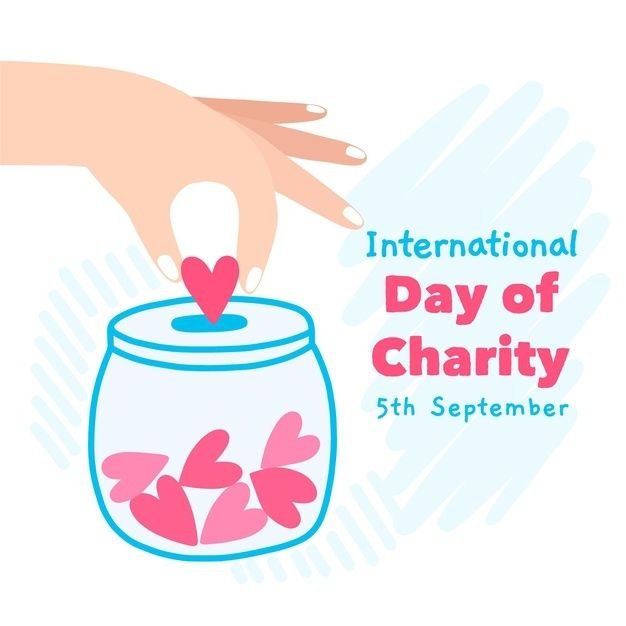
The International Day of Charity is an international day observed annually on 5 September. It was declared by the United Nations General Assembly in 2012. The prime purpose of the International Day of Charity is to raise awareness and provide a common platform for charity related activities all over the world for individuals, charitable, philanthropic and volunteer organizations for their own purposes on the local, national, regional and international level.
The International Day of Charity was conceived as a Hungarian civil society initiative supported by the Hungarian Parliament and Government in 2011, to enhance visibility, organize special events, and in this way to increase solidarity, social responsibility and public support for charity.
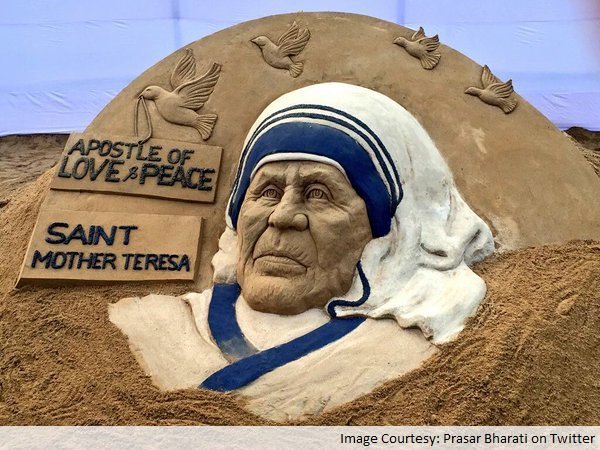
September 5 was chosen in order to commemorate the anniversary of the passing away of Mother Teresa at Calcutta, who received the Nobel Peace Prize in 1979 “for work undertaken in the struggle to overcome poverty and…
Dr. Sarvepalli Radhakrishnan (5 September 1888 – 17 April 1975) was an Indian philosopher and politician who served as the 2nd President of India from 1962 to 1967 and 1st Vice President of India from 1952 to 1962. He was also the 2nd Ambassador of India to Soviet Union from 1949 to 1952 & 4th Vice-Chancellor of Banaras Hindu University from 1939 to 1948.
One of the most distinguished twentieth-century scholars of comparative religion and philosophy, Radhakrishnan held the King George V Chair of Mental and Moral Science at the University of Calcutta from 1921 to 1932 and Spalding Chair of Eastern Religion and Ethics at University of Oxford from 1936 to 1952.
Radhakrishnan’s philosophy was grounded in Advaita Vedanta, reinterpreting this tradition for a contemporary understanding. He defended Hinduism against what he called “uninformed Western criticism”,contributing to the formation of contemporary Hindu identity.
He has been influential in shaping the understanding of Hinduism, in both India and the west, and earned a reputation as a bridge-builder between India and the West. Radhakrishnan was awarded several high awards during his life, including a knighthood in 1931, the Bharat Ratna, the highest civilian award in India, in 1954, and honorary membership of the British Royal Order of Merit in 1963.
He was also one of the founders of Helpage India, a non profit organisation for elderly underprivileged in India. Radhakrishnan believed that “teachers should be the best minds in the country”. Since 1962, his birthday has been celebrated in India as Teachers’ Day on 5 September every year.
Always Guiding & Inspiring Us
Best Quotes On Teachers’ Day:
“Teaching is a very noble profession that shapes the character, caliber, and future of an individual. If the people remember me as a good teacher that will be the biggest honor for me.” – A. P. J. Abdul Kalam
“It is the supreme art of the teacher to awaken joy in creative expression & knowledge.” – Albert Einstein
“Education is the manifestation of perfection already in man.” – Swami Vivekananda
“I have always felt that the true text-book for the pupil is his teacher.” – Mahatma Gandhi
“Teachers are the most responsible and important members of society because their professional efforts affect the fate of the earth.” – Helen Caldicott
“Technology is just a tool. In terms of getting the kids working together and motivating them, the teacher is the most important.” – Bill Gates
“The true teachers are those who help us think for ourselves.” – Dr. Sarvepalli Radhakrishnan
“Education is the most powerful weapon which you can use to change the world.” – Nelson Mandela
“Good teachers know how to bring out the best in students.” – Charles Kuralt
“One book, one pen, one child, and one teacher can change the world.” – Malala Yousafzai
“The whole art of teaching is only the art of awakening the natural curiosity of young minds to satisfy it afterward.” – Anatole France
“Those who educate children well are more to be honored than they who produce them; for these only gave them life, those the art of living well.” – Aristotle
“The art of teaching is the art of assisting discovery.” – Mark Van Doren
“I’m not a teacher: only a fellow traveler of whom you asked the way. I pointed ahead- ahead of myself as well as you.” – George Bernard Shaw
“There are two kinds of teachers: the kind that fills you with so much quail shot that you can’t move, and the kind that just gives you a little prod behind and you jump to the skies.” – Robert Frost
“If you were successful somebody along the line gave you some help. There was a great teacher somewhere in your life.” – Barack Obama
“The dream begins with a teacher who believes in you, who tugs and pushes and leads you to the next plateau, sometimes poking you with a sharp stick called truth.” – Dan Rather
“Good teaching must be slow enough so that it is not confusing, and fast enough so that it is not boring.”- Sydney J. Harris
“A teacher affects eternity; he can never tell where his influence stops.” – Henry Brooks Adams
“The teacher who is indeed wise does not bid you enter the house of his wisdom but rather leads you to the threshold of your mind.” – Khalil Gibran
“Come forth into the light of things, let nature be your teacher.” – William Wordsworth
“The mediocre teacher tells. The good teacher explains. The superior teacher demonstrates. The great teacher inspires.” – William Arthur Ward.
“A good teacher must be able to put himself in the place of those who find learning hard.” – Eliphas Levi.
“One good teacher in a lifetime may sometimes change a delinquent into a solid citizen.” – Philip Wylie.
It is observed on two days of the year – February 22nd & September 4th.
Colleen Paige, the Pet Lifestyle Expert and author founded National Wildlife Day in 2005. She created the day in honor of and later in memory of wildlife conservationist Steve Irwin. The global awareness day brings education to the public concerning the number of endangered animals and the need for conservation and preservation.
National Wildlife Day on September 4th encourages improved awareness of the species around us and in the broader world. This National Day focuses on endangered species, preservation, and conservation efforts around the world. Zoos, aviaries and marine sanctuaries provide a variety of ways to get involved.
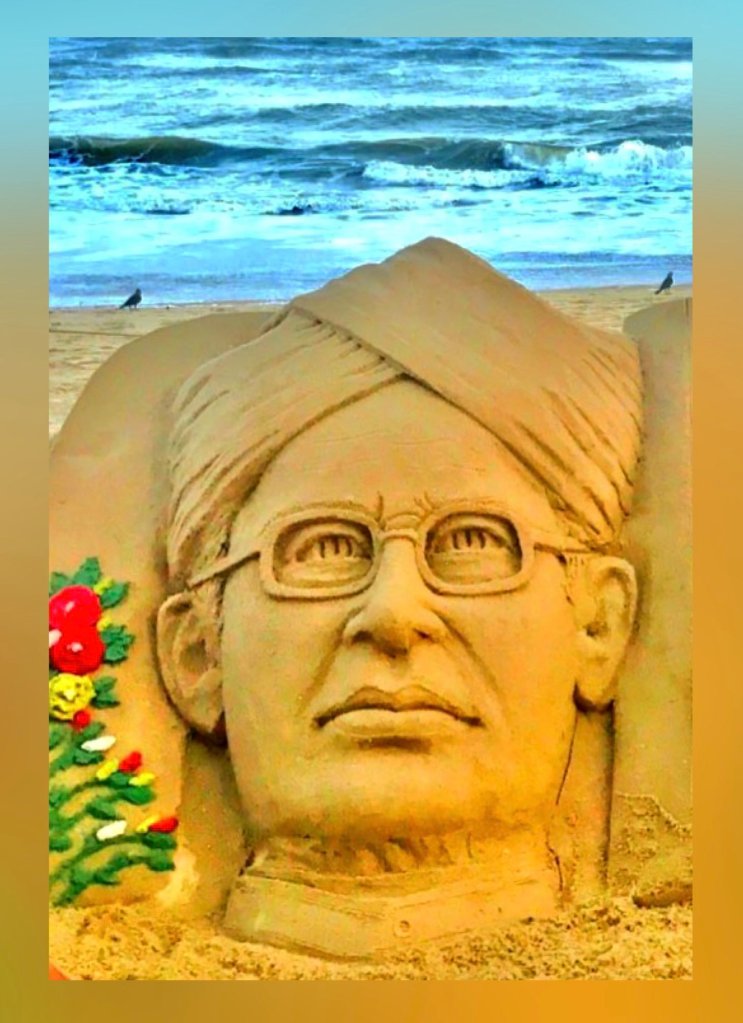
Sand art by Sudarsan Pattnaik
No matter where we live, thete are opportunities abound to learn and participate on the day. Wildlife doesn’t only exist in the forest or outside the city limits. On a closer look we can observe that the creatures and animals sharing our world live under our feet and in the sky above us. Our rivers, lakes and oceans are teeming with wildlife of all sizes. It’s essential to understand how we impact the habitats that animals need to survive. Their homes supply their food and shelter.
Since wildlife relies on a stable habitat, understanding conservation and preservation is important. Developing strategies helps to maintain existing habitats and repair or replace those that have been destroyed. These strategies are especially important when a decline in a species is detected.
Around the world, facilities and organizations will present seminars and educational programs. Additionally, podcasts and documentaries alert us to the changing conditions for various species around the world. Some may be as close as our own backyard. From the sky to the depths of the ocean, wildlife surrounds us.
“The great book of nature is written in mathematical language.” Galileo Galilei
“In the Beginning” by Hans Zimmer and Lorne Balfe (courtesy of College of Random):
“In fact, mathematics is the closest that we humans get to true magic. How else to describe the patterns in our heads that — by some mysterious agency — capture patterns of the universe around us?” Ian Stewart
Courtesy of Cristóbal Vila:
“Algebra is but written geometry and geometry is but figured algebra.”
Sophie Germain mathematician
Courtesy of TIFF Originals:
I have faith in reading’s power and the learning and imagination it nourishes. There is a danger that in our in-the-moment news feeds, the time of selfies obsession defines identities, which hide from our view the complexity of feelings and ideas that books demand we quietly and determinedly engage in. That is why I have started the Literary Series, and I am elated…
Sometimes I have to admit that I get joy mixed up with being thankful. The two are different but so intertwined in my life, that I rarely feel one without the other.
Most mornings as a child I was awakened by one of my parents calling out, “Rise and Shine!” (I now know my mom and dad had coffee before they woke us up! I never thought about the head-start they had on us kids!) From there we went to breakfast where everyone talked about how they slept, the events of the day or something funny. Nevertheless, rising and shining stuck with me.
Later when I attended nursing school and shared a common bathroom with 10-12 other young women in various stages of wakening, I was surprised to find my “Good morning!” greetings were greeted with much less enthusiasm than I was accustomed to! Sleepy, half opened eyes, with gaping…











 B +Ve!!
You must be logged in to post a comment.