The black-naped oriole (Oriolus chinensis) is a passerine bird in the oriole family that is found in many parts of Asia. There are several distinctive populations within the wide distribution range of this species and in the past the slender-billed oriole (Oriolus tenuirostris) was included as a subspecies. Unlike the Indian golden oriole which only has a short and narrow eye-stripe, the black-naped oriole has the stripe broadening and joining at the back of the neck. Males and females are very similar although the wing lining of the female is more greenish. The bill is pink and is stouter than in the golden oriole.
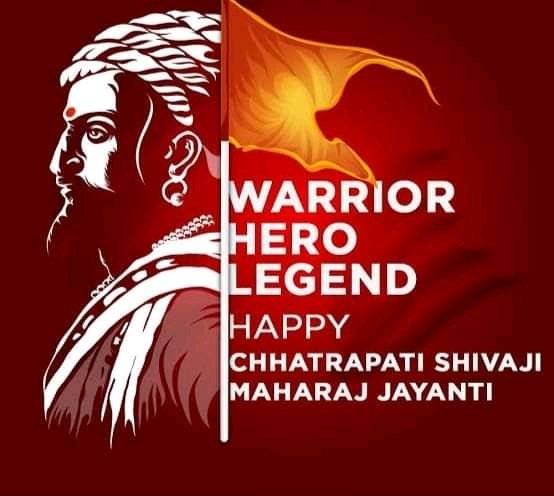
Chhatrapati Shivaji Maharaj Jayanti is a festival and public holiday of the Indian state of Maharashtra. This festival is celebrated on February 19 (according to Julian date), celebrating the birth anniversary of Chhatrapati Shivaji Maharaj, the first Chhatrapati and founder of the Maratha Empire, Some people celebrate this day by Hindu Calendar in Maharashtra.
Krishna opens his advice, with a semblance of a gentle smile, to the grief-struck Arjuna. This befits the occasion where the need is to solve a conflict laden with emotional overtones. (2.10)
हे भरतवंशी धृतराष्ट्र! अंतर्यामी श्रीकृष्ण महाराज दोनों सेनाओं के बीच में शोक करते हुए उस अर्जुन को हँसते हुए से यह वचन बोले ॥10॥
Krishna opens his advice, with a semblance of a gentle smile, to the grief-struck Arjuna. This befits the occasion where the need is to solve a conflict laden with emotional overtones. (2.10)
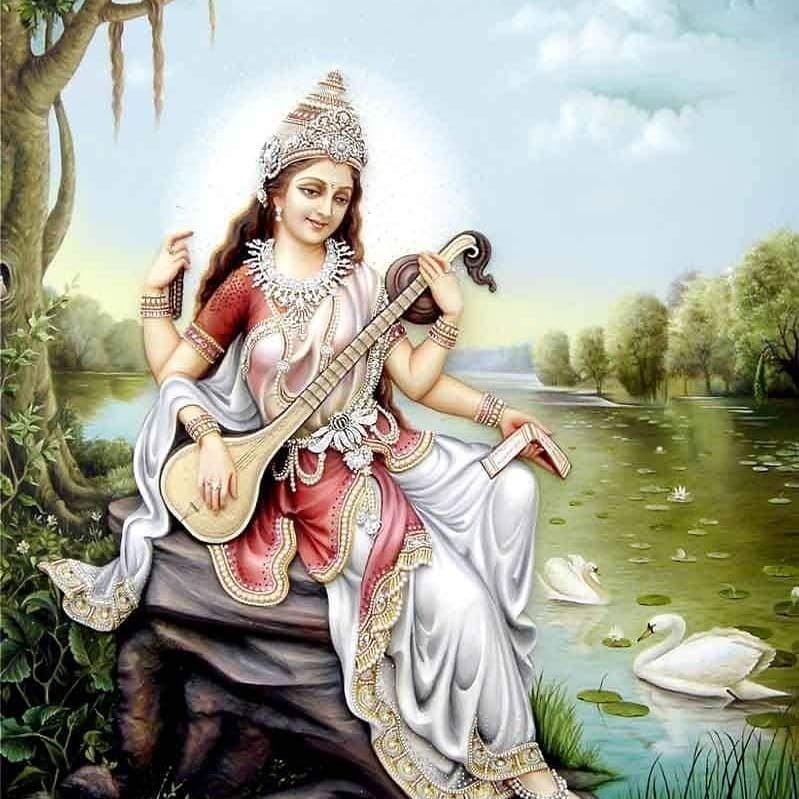
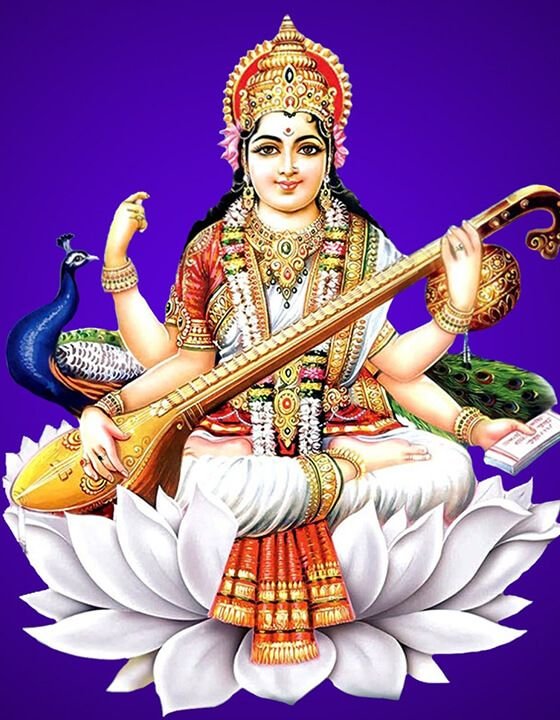
Vasant Panchami, also called (Saraswati Puja) is a festival that marks the preparation for the arrival of spring. The festival is celebrated by people in various ways depending upon the region in the life in the Indian subcontinent. Vasant Panchami also marks the start of preparation for Holika and Holi, which take place forty days later. The Vasant Utsava (festival) on Panchami is celebrated forty days before Spring, because any season’s transition period is 40 days, and after that, the season comes into full bloom.
Valentine’s Day, also called Saint Valentine’s Day or the Feast of Saint Valentine, is celebrated annually on February 14. It was originated as a Roman Catholic feast day honouring Saint Valentine and, through later folk traditions, has become a significant cultural, religious, and commercial celebration of romance and romantic love in many regions of the world.
Saint Valentine was a clergyman – either a priest or a bishop – in the Roman Empire who ministered to persecuted Christians. He was martyred and his body buried on the hill of Terni on the Via Flaminia near a necropolis, on February 14, which has been observed as the Feast of Saint Valentine (Saint Valentine’s Day) since 496 AD.
on the mental stability and emotional ability of their children to thrive or merely survive
they can nurture and coax boost and boast
or shred their child to threads
self worth hangs on her approval crumbles violently at disapproval
most feed and cloth their kids her subliminal messages bids
whether they bloom or wilt and wither
reflect on her impact felt enough or lacked
each child subjected none left unaffected
favoured or unsavoured
know well what impacted you will you parent with that hue
or level that field sensibility revealed
mothers set the tone awesomeness or blown
each action or inaction causes reactions
empowered or soured promoted or demoted bemused or confused bolstered or blistered enabled or disabled at ease or appeased happy or hated elated or slated helped or harmed fulfilled or fuelled open or awkward silent or subdued kind or cruel
एवं बहुविधा यज्ञा वितता ब्रह्मणो मुखे। कर्मजान्विद्धि तान्सर्वानेवं ज्ञात्वा विमोक्ष्यसे॥
Leaders shall distinguish between the various types of (mental, intellectual, physical) skills required and match the work accordingly. (4.32)
इसी प्रकार और भी बहुत तरह के यज्ञ वेद की वाणी में विस्तार से कहे गए हैं। उन सबको तू मन, इन्द्रिय और शरीर की क्रिया द्वारा सम्पन्न होने वाले जान, इस प्रकार तत्व से जानकर उनके अनुष्ठान द्वारा तू कर्म बंधन से सर्वथा मुक्त हो जाएगा ॥32॥
Leaders shall distinguish between the various types of (mental, intellectual, physical) skills required and match the work accordingly. (4.32)
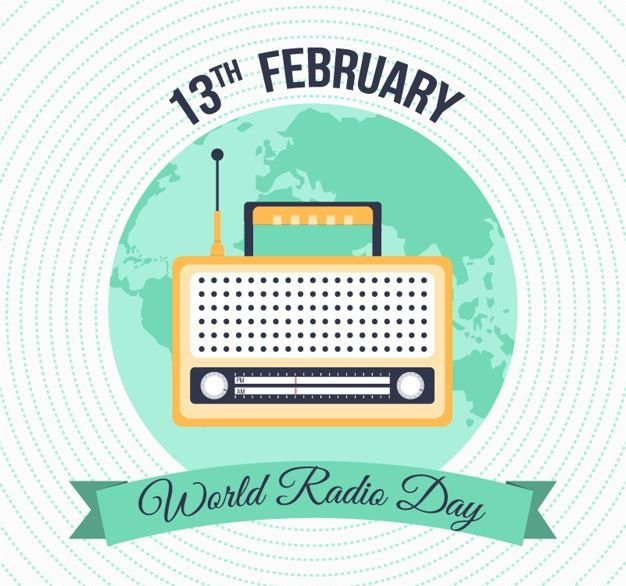
World Radio Day is an international day celebrated on 13 February each year. The Day was decided by UNESCO on 3 November 2011 during its 36th conference.
World Radio Day 2021: During this day UNESCO invites stations to celebrate the 10th anniversary of this event and more than a century of radio. This edition of the radio day focuses on three sub-themes:
EVOLUTION. The world is changing, radio is evolving. This sub-theme refers to the resilience of radio, to its sustainability; INNOVATION. The world is changing, radio is adapting and innovating. Radio has had to adapt to new technologies to remain the medium of mobility par excellence, accessible to all and everywhere; CONNECT. The world is changing, radio connects. This sub-theme highlights the services provided by radio to our society / Natural disasters, socioeconomic crises, epidemics, etc … This day will include six hours in two different programs and Off sequences all broadcast live on Youtube, Facebook and Twitch.
Background: Following a request from the Spanish Radio Academy on 20 September 2010, Spain proposed that the UNESCO Executive Board include an agenda item on the proclamation of a World Radio Day. UNESCO’s Executive Board the agenda item in its provisional agenda for the proclamation of a “World Radio Day” on 29 September 2011. UNESCO carried out a wide consultation in 2011 with diverse stakeholders, such as broadcasting associations, UN agencies, funds and programmes, relevant NGOs, foundations and bilateral development agencies, as well as UNESCO Permanent Delegations and National Commissions for UNESCO. Among the answers, 91% were in favour of the project, including official support from the Arab States Broadcasting Union (ASBU), the Asia-Pacific Broadcasting Union (ABU), the African Union of Broadcasting (AUB), the Caribbean Broadcasting Union (CBU), the European Broadcasting Union (EBU), the International Association of Broadcasting (IAB), the North American Broadcasters Association (NABA), the Organización de Telecomunicaciones Ibeoramericanas (OTI), BBC, URTI, Vatican Radio, etc. The results of this consultation are available in UNESCO’s document 187 EX/13.
The Board recommended to the UNESCO 36th session of the General Conference that it proclaim a World Radio Day at its 36th session, and that this day be celebrated by UNESCO on 13 February, the anniversary of the day that the United Nations established the United Nations Radio in 1946. It also invited all United Nations Member States, organizations of the United Nations system and other international and regional organizations, professional associations and broadcasting unions, as well as civil society, including non-governmental organizations and individuals, to duly celebrate World Radio Day, in the way that each considers most adequate. The board further requested that UNESCO’s Director-General bring the resolution to the attention of the Secretary-General of the United Nations, so that World Radio Day could be endorsed by the General Assembly and celebrated by the whole system. The matter was subsequently treated by UNESCO’s General Conference, which adopted resolution contained in the file 36 C/63. World Radio Day was thus unanimously proclaimed by all Member States of UNESCO in November 2011.
In December 2012, The General Assembly of the UN endorsed the proclamation of World Radio Day, which thereby became a day to be celebrated by all UN agencies, funds and programmes and their partners. File A/RES/67/124. Various radio industry bodies around the world are supporting the initiative by encouraging stations in developed countries to assist those in the developing world. At UNESCO, the consultation, proclamation and celebrations were handled by Mirta Lourenco, Chief of the Sector for Media Development.
The first World Radio Day:
In honour of the first World Radio Day in 2012, Lifeline Energy, FrontlineSMS, SOAS Radio and Empowerhouse hosted a seminar in London. A variety of practitioners, academics and tools providers joined at the School of Oriental and African Studies to explore ways in which radio reaches even the most remote and vulnerable communities. Speakers included Guy Berger (Director for Freedom of Expression and Media Development at UNESCO), Dr Chege Githiora (Chairman of the Centre of African Studies at SOAS), Birgitte Jallov (Empowerhouse/ Panos London), Amy O’Donnell (FrontlineSMS:Radio), Carlos Chirinos (SOAS Radio), and Linje Manyozo (LSE). The panel was moderated by Lucy Durán (SOAS, BBC Radio 3, Human Planet).[citation needed] At the University of Pisa in Italy, a public event was held on 13 February 2012 to commemorate World Radio Day. The event was organized by Italradio and the Faculty of Engineering and Telecommunication and focused on the cost and ease of use of radio as a source of information. Pisa was chosen as the first Italian city to host an intercontinental radio station built by Marconi in the early years of 20th century.
In 2012, in Barcelona, Spain, a public event organised by College of Telecommunications Engineers of Catalunya (COETTC) was held on 21 February 2012 to commemorate World Radio Day. The event was organised with the help of the Government of Catalonia. There were panellists from radio stations and personalities from the world of radio broadcasting in attendance. The main event was a panel discussion entitled “For a more global and competitive radio”. In Switzerland, the European Broadcasting Union organised a Digital Radio Week. This was a series of technical events starting on 13 February 2012, with the participation of the main radio standardisation organisations: DRM Consortium, WorldDMB, RadioDNS. There was also a local digital radio transmission in DAB+ demonstrating the democratization of transmission for smaller structures, using CRC mmbTools open software defined radio tools.
Bangladesh NGOs Network for Radio and Communication (BNNRC) promotes the observance of World Radio Day on 13 February in collaboration with public service Broadcasting, Commercial broadcasting & Community Broadcasting at local and national level. The World Radio Day Observation National Committee was established in Bangladesh for this purpose.
International Committee of Radio (World Radio Day Committee) :
This committee was born in 2012 after the proclamation of the UNESCO’s World Radio Day. The idea came from the president of the Spanish Radio Academy, Jorge Alvarez. This committee consists the most important radio broadcast organisations: ITU-International Telecommunication Union, Spanish Radio Academy, IAB-International Association of Broadcasting, ABU-Asia-Pacific Broadcasting Union, ASBU-Arab States Broadcasting Union, EBU/UER-European Broadcasting Union, AER-Association of European Radios, AMARC-World Association of Community Radio Broadcasters, AIBD-Asia Pacific Institute for Broadcasting Development, BNNRC-Bangladesh NGOs Network for Radio and Communication, URTI-International Radio and Television Union and AUB/UAR-The African Union of Broadcasting. The Founding Act was signed on March 12, 2012.
Radio stations around the world are invited to promote the official interactive platform wrd13.com of the international WRD Committee by proposing to their listeners to deposit audio messages on it, in any language, which they will be able to download for broadcasting all day long on 13 February.
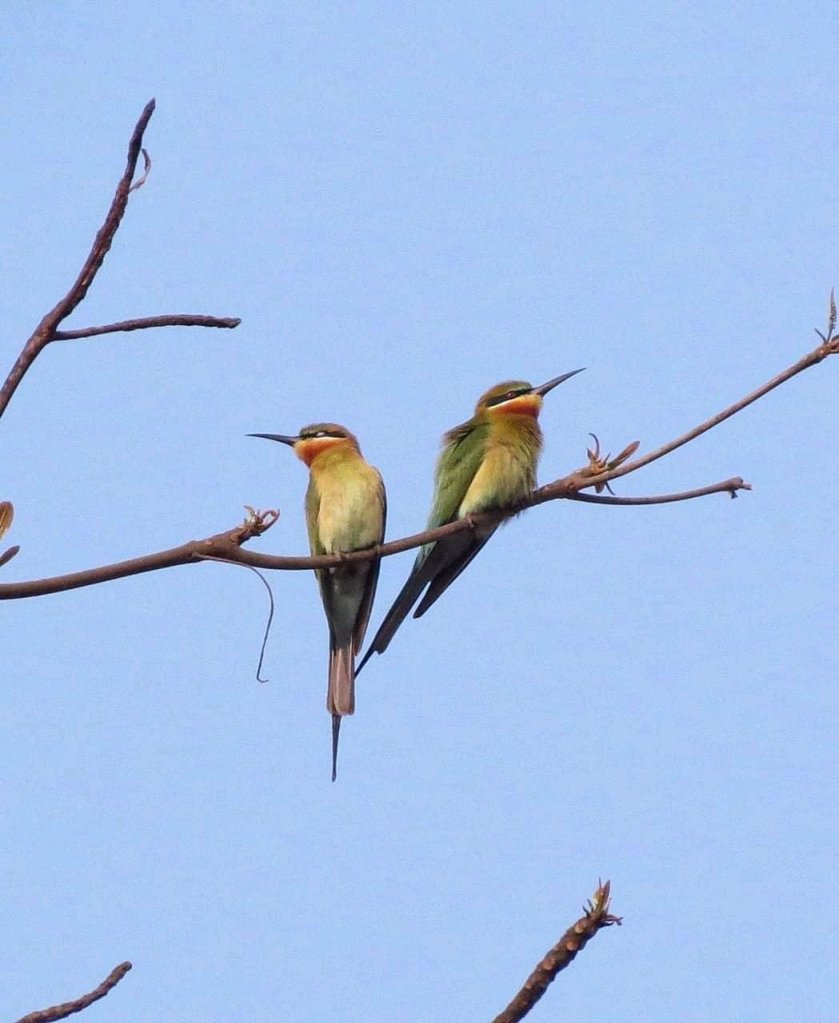
The blue-tailed bee-eater (Merops philippinus) is a near passerine bird in the bee-eater family Meropidae. It is widely distributed across South and Southeast Asia where many populations are strongly migratory, and seen seasonally in many parts but breeding colonially in small areas across their range, mostly in river valleys, where the nest by tunneling into loamy sand banks. They are seen mostly in open habitats close to water.
This species, like other bee-eaters, is a richly coloured, slender bird. It is predominantly green; its face has a narrow blue patch with a black eye stripe, and a yellow and brown throat; the tail is blue and the beak is black. The three outer toes are united around their bases. It can reach a length of 23–26 cm, including the two elongated central tail feathers which can jut two inches more than the remaining ten feathers. Sexes are alike. This species is usually found near water and like other bee-eaters it predominantly eats flying insects, especially bees (as large as the Xylocopa sp.), wasps and hornets, which are caught in the air by sorties from an open perch. They may also forage in flight over estuaries, backwaters and even over the sea but not far from the coast. This species probably takes bees and dragonflies in roughly equal numbers. The insects that are caught are beaten on the perch to kill and break the exoskeleton. This habit is seen in many other members of the order Coraciiformes. They call mainly in flight with a rolling chirping whistling teerp.
The only confusable species within its range is the blue-cheeked bee-eater which however tends to be found in drier areas. The blue-tailed differs in having the rump and tail blue rather than green and black. The undertail feathers are bluish rather than green in the blue-cheeked. The blue cheek patch is much smaller while the chestnut on the throat and breast darker and covering a larger area.
They breed in April to May in India nesting colonially with closely placed nest holes in a vertical mudbank or even burrowing into gently sloping land. They tend to choose sandy and sandy clay loams but avoid heavier clay loams. They also prefer clear mud banks without any vegetation cover. In Sri Lanka, they have been noted to breed in artificial sand dunes created by dredging of sea sand. The nest tunnel can run nearly 2 metres deep. About 5 to 7 near spherical eggs are laid. Both the male and the female take care of the eggs. The parents guard the nest to prevent intraspecific brood parasitism and extra pair copulation. These birds also feed and roost communally. One or two helpers may join the breeding pair after incubation begins. Although males and females appear similar to the human eye, males tend to have longer central tail feather extensions and UV reflectance studies demonstrate that healthy males had darker chestnut throats and brighter green body plumage while females showed brighter blue rumps and yellow chins.
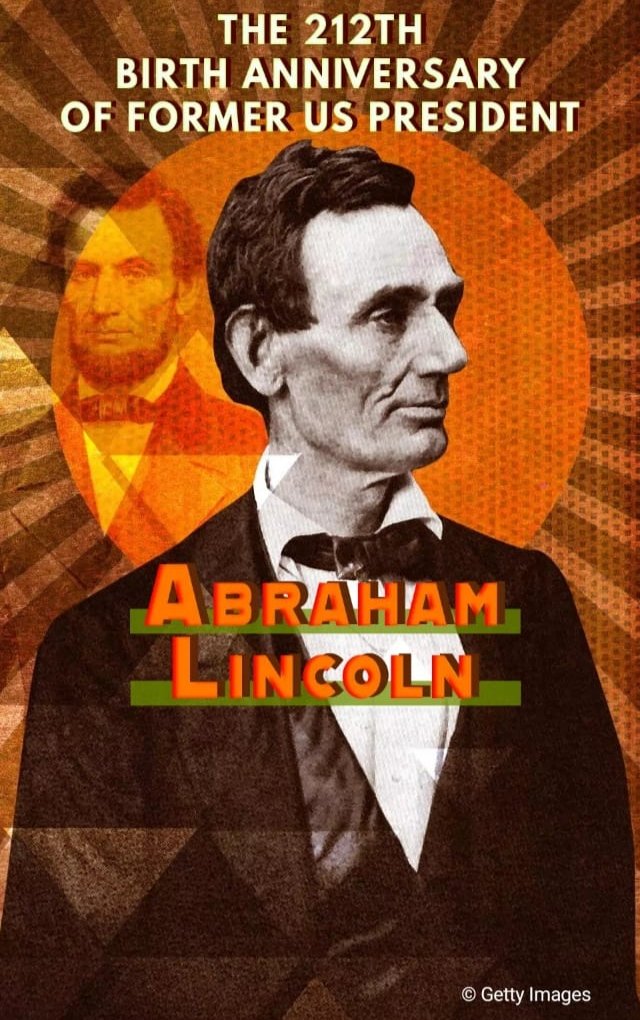
Abraham Lincoln was an American statesman and lawyer who served as the 16th president of the United States from 1861 until his assassination in 1865. Lincoln led the nation through the American Civil War, the country’s greatest moral, constitutional, and political crisis. He succeeded in preserving the Union, abolishing slavery, bolstering the federal government, and modernizing the U.S. economy.
Lincoln was born into poverty in a log cabin and was raised on the frontier primarily in Indiana. He was self-educated and became a lawyer, Whig Party leader, Illinois state legislator, and U.S. Congressman from Illinois. In 1849, he returned to his law practice but became vexed by the opening of additional lands to slavery as a result of the Kansas–Nebraska Act. He re-entered politics in 1854, becoming a leader in the new Republican Party, and he reached a national audience in the 1858 debates against Stephen Douglas. Lincoln ran for President in 1860, sweeping the North in victory. Pro-slavery elements in the South equated his success with the North’s rejection of their right to practice slavery, and southern states began seceding from the union. To secure its independence, the new Confederate States fired on Fort Sumter, a U.S. fort in the South, and Lincoln called up forces to suppress the rebellion and restore the Union.
As the leader of moderate Republicans, Lincoln had to navigate a contentious array of factions with friends and opponents on both sides. War Democrats rallied a large faction of former opponents into his moderate camp, but they were countered by Radical Republicans, who demanded harsh treatment of the Southern traitors. Anti-war Democrats (called “Copperheads”) despised him, and irreconcilable pro-Confederate elements plotted his assassination. Lincoln managed the factions by exploiting their mutual enmity, by carefully distributing political patronage, and by appealing to the U.S. people. His Gettysburg Address became a historic clarion call for nationalism, republicanism, equal rights, liberty, and democracy. Lincoln scrutinized the strategy and tactics in the war effort, including the selection of generals and the naval blockade of the South’s trade. He suspended habeas corpus, and he averted British intervention by defusing the Trent Affair. He engineered the end to slavery with his Emancipation Proclamation and his order that the Army protect and recruit former slaves. He also encouraged border states to outlaw slavery, and promoted the Thirteenth Amendment to the United States Constitution, which outlawed slavery across the country.
Lincoln managed his own successful re-election campaign. He sought to heal the war-torn nation through reconciliation. On April 14, 1865, just days after the war’s end at Appomattox, Lincoln was attending a play at Ford’s Theatre with his wife Mary when he was assassinated by Confederate sympathizer John Wilkes Booth. His marriage had produced four sons, two of whom preceded him in death, with severe emotional impact upon him and Mary. Lincoln is remembered as the martyr hero of the United States and he is consistently ranked as one of the greatest presidents in American history.







 B +Ve!!
You must be logged in to post a comment.