He had a heart, he said one of stone He locked its gate with an iron lock Flocked on its boundary were silver thorns But it was once filled with brilliant thoughts
He remembers days when he was young He had people who loved him well He had everyone, even two-three friends But he was left with none in the end
It was then he learned the world’s unkind ways From then on he was never the same His little fragile heart was thrown away in flame He became the fire in the midst of pain
Now people look at him then they say How cold he is to our earthly ways They can’t see his past drenched in rain The little boy that still is behind the gate
When we think about spirituality, it’s easy to get overwhelmed by all the different paths that are available.
With so many teachings and practices out there, how do we know which one is the “right” one? How do we avoid getting lost on the wrong path? In this post, I want to talk about the risks of being on the wrong spiritual path, and why it’s important to choose wisely.
Imagine that you’re on a road trip. You have a map and a clear destination in mind, but as you start driving, you notice that there are a lot of different roads to choose from. Some are well paved and well lit, while others are rough and unmarked. You have to make a decision: Which road do you choose?
Choosing the wrong spiritual path is like choosing the wrong road. Just like a poorly marked road can lead you in…
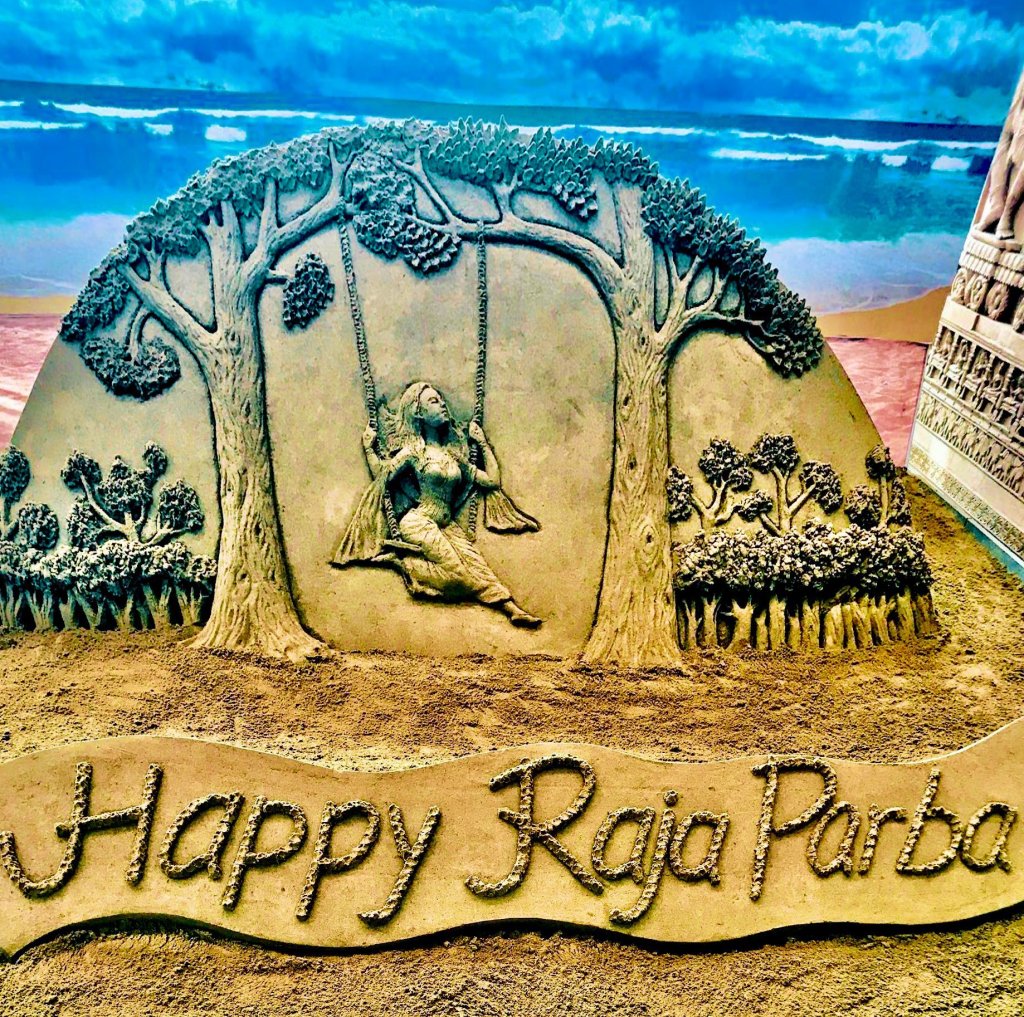
Raja (Odia: ରଜ) or Raja Parba (Odia: ରଜ ପର୍ବ) or Mithuna Sankranti is a three-day-long festival of womanhood celebrated in Odisha, India. The second day of the festival signifies beginning of the solar month of Mithuna from, which the season of rains starts.
It is believed that the mother Goddess Earth or the divine wife of Lord Vishnu undergoes menstruation during the first three days. The fourth day is called Vasumati Snana, or ceremonial bath of Bhudevi. The term Raja came from the Sanskrit word ‘Rajas’ which means menstruation and when a woman menstruates, she is called ‘Rajaswala’ or a menstruating woman, and in medieval times the festival became more popular as an agricultural holiday marking the worship of Bhudevi, who is the wife of lord Jagannath. A silver idol of Bhudevi is still to be found in the Puri Temple beside Lord Jagannath .
You spin grandiose turmeric-indigo dreams encompassing the eiffel and the eye
you paint the skies vivid lettuce green cabbage clouds melt in the summer heat
you weave whimsical seasons of love rescuing my heart from the cycles of highs and lows
Over the town by Marc Chagall
you sweep me off my high-heeled shoes carrying me over the hills and the dingle
you build a magnificent castle of passion leaving behind mundane grey and red dwellings
you make love soar, defy gravity kite-like we float, not as two, but as one.
Written for David’s W3 for POW Melissa’s ekphrastic prompt based on the above two paintings. Also for Eugi’s moonwashed weekly prompt and Kerfe’s random word generator.
The concept of a World Oceans Day was first proposed in 1992 at the Earth Summit in Rio de Janeiro as a way to celebrate our world’s shared ocean and our personal connection to the sea, as well as to raise awareness about the crucial role the ocean plays in our lives and the important ways people can help protect it.
The purpose of the Day is to inform the public of the impact of human actions on the ocean, develop a worldwide movement of citizens for the ocean, and mobilize and unite the world’s population on a project for the sustainable management of the world’s oceans.










You must be logged in to post a comment.